
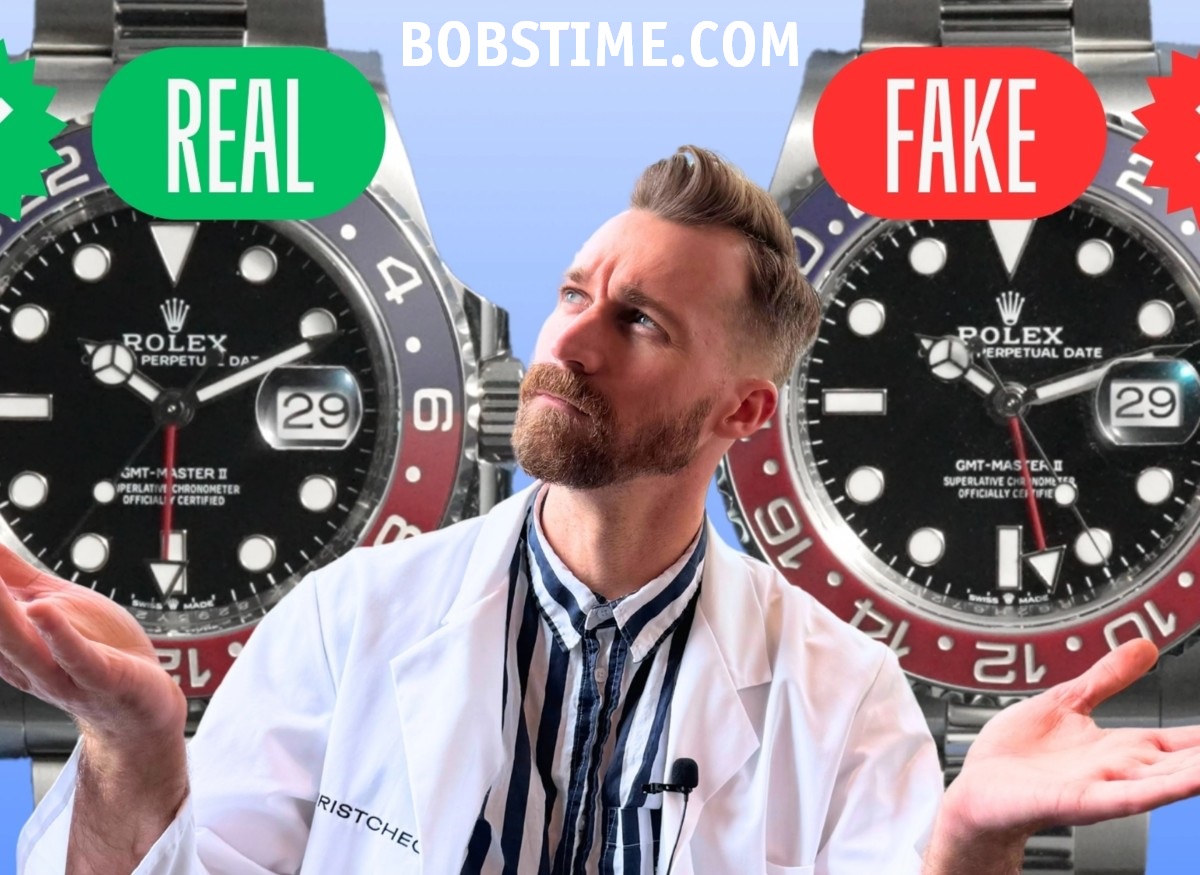
In the global luxury watch market, which hit $33.56 billion in 2026, the demand for iconic timepieces from brands like Rolex, Patek Philippe, and Omega has never been higher. But with this demand comes an explosion of counterfeit watches—from low-quality fakes with obvious flaws to hyper-realistic super clones that can fool even casual enthusiasts. These counterfeits flood online marketplaces, social media, and even local retail stores, preying on unsuspecting buyers looking for a deal on a luxury watch. For collectors, first-time buyers, and anyone investing in a timepiece, the ability to distinguish a genuine watch from a fake is an essential skill—one that protects your wallet, your reputation, and your investment in horological craftsmanship.
This comprehensive guide shares expert tips to identify genuine vs. fake watches, drawing on industry knowledge, 2026 market insights, and the latest counterfeiting trends. We’ll cover universal telltale signs that apply to all luxury watch brands, as well as brand-specific red flags for the most counterfeited models (like Rolex’s Submariner and Daytona). From microscopic details in engravings and materials to mechanical performance and documentation, we’ll leave no stone unturned. Whether you’re buying a brand-new watch from an authorized dealer, a pre-owned piece from a secondary marketplace, or even evaluating a watch in your collection, these expert tips will empower you to spot a fake with confidence—no professional horologist required (though we’ll also cover when to call in the experts for extra peace of mind).
Counterfeiters are constantly evolving, perfecting their replicas with better materials and more precise engineering. But genuine luxury watches are built with uncompromising attention to detail—details that counterfeiters simply cannot replicate at scale, no matter how advanced their techniques get. By mastering the tips in this guide, you’ll learn to see these details, separate the real from the fake, and make informed decisions when buying or collecting luxury watches.
Why Spotting a Fake Watch Matters More Than Ever
Before diving into the expert tips, it’s critical to understand why distinguishing genuine vs. fake watches is non-negotiable in 2026. Luxury watches are more than just timekeeping devices—they are wearable art, status symbols, and financial investments. A genuine Rolex Submariner, for example, retains its value for decades and often appreciates, while a super clone of the same model is worth only a fraction of the genuine piece, with zero resale value. Buying a fake watch means throwing away your money on a product that will never hold its worth, and in some cases, it can even lead to embarrassment if the fake is spotted by others.
Beyond financial loss, fake watches lack the quality, durability, and performance of genuine luxury timepieces. Counterfeiters cut corners with cheap materials, shoddy craftsmanship, and unreliable movements—meaning a fake watch will likely break, lose time, or fade within months, while a genuine luxury watch can last for generations with proper care. Genuine watches also come with manufacturer warranties, authorized service centers, and a legacy of craftsmanship; fake watches have none of these, leaving you with no recourse if something goes wrong.
Finally, the production and sale of counterfeit watches is a criminal enterprise that funds other illegal activities, including fraud and theft. By avoiding fake watches, you’re not just protecting yourself—you’re supporting the legitimate horological industry, which employs skilled craftsmen and invests in innovation and engineering.
Universal Expert Tips: Spot a Fake Watch (Any Brand)
While every luxury watch brand has its own unique authentication markers, there are universal telltale signs that apply to all genuine timepieces—signs that counterfeiters, even those making super clones, consistently fail to replicate. These tips focus on the foundational elements of luxury watchmaking: craftsmanship, materials, movement, and branding. Master these, and you’ll be able to spot 90% of fake watches at a glance, even if you’re not familiar with the specific brand or model.
Tip 1: Inspect the Branding and Engravings for Precision
Genuine luxury watches are synonymous with precision—this applies not just to their movements, but to every engraving, logo, and piece of text on the watch. Counterfeiters, even those making high-quality super clones, lack the advanced machinery and quality control to replicate this precision, leading to sloppy, inconsistent, or incorrect branding. This is the single easiest way to spot a fake watch, and it only requires a 10x loupe (a must-have tool for any watch buyer).
What to look for in genuine branding and engravings:
– Crisp, sharp lettering: All text (brand name, model name, water resistance, etc.) is laser-engraved or printed with perfect kerning (letter spacing), no blurring, and no misspellings. Counterfeits often have smudged, uneven, or misspelled text—even a single typo (e.g., “Rolez” instead of “Rolex”) is a dead giveaway.
– Symmetrical logos: Brand logos (e.g., Rolex’s coronet, Omega’s omega symbol) are perfectly symmetrical, with clean lines and no uneven edges. Counterfeit logos are often lopsided, with thick or blurry lines, or they’re the wrong size for the watch face.
– Deep, consistent engravings: Engravings on the case back, bezel, or bracelet are deep, precise, and uniform in depth and width. Counterfeit engravings are often shallow, uneven, or filled with cheap paint to make them look deeper than they are (the paint will chip or fade over time).
– Matching branding: The brand logo and text are consistent across the entire watch—on the dial, case back, crown, and clasp. Counterfeits often have mismatched logos (e.g., a different coronet on the crown than on the dial) or inconsistent font styles.
Pro expert trick: For engraved text, run your finger over it gently. Genuine engravings will feel smooth and consistent, with no rough edges; fake engravings will often feel bumpy or uneven, with sharp edges from poor machining.
Tip 2: Evaluate the Materials—Genuine Luxury = Premium Materials
Luxury watch brands use only the highest-quality materials in their timepieces: 904L stainless steel, 18k gold (solid, not plated), sapphire crystal, ceramic bezels, and genuine leather or rubber straps. Counterfeiters, by contrast, use cheap alternatives—316L steel, gold plating, mineral glass, plastic bezels, and fake leather—to cut costs. These material differences are often easy to spot with a little attention to detail, and they’re a key indicator of a fake watch.
Key material checks for genuine watches:
– Stainless steel: Most luxury brands (like Rolex) use 904L stainless steel, a high-grade alloy that is heavier, more corrosion-resistant, and has a brighter, more polished finish than the 316L steel used in fake watches. A genuine steel watch will feel substantial and heavy in your hand; a fake will feel lightweight or hollow, especially in the bracelet links (fake bracelets often use hollow links, while genuine ones use solid links).
– Crystal: All genuine luxury watches use scratch-resistant sapphire crystal, which is hard and clear, with no green or blue tint (unless it has an anti-reflective AR coating on the inside). Fake watches use mineral glass or plastic, which is lighter, more prone to scratches, and often has a noticeable tint. To test: Tap the crystal gently with your fingernail—sapphire crystal will make a sharp, high-pitched sound, while mineral glass/plastic will make a dull, low sound (never use a hard object to test, as this can scratch even sapphire crystal).
– Gold/Rose Gold: Genuine gold watches use solid 18k (or 14k) gold; fake watches use gold plating or gold-toned alloy. Plating will wear off over time, revealing the cheap metal underneath, but you can spot it immediately by checking the edges of the case or bracelet—plating often chips or fades at the joints, where the metal rubs together. Solid gold will also feel heavier than plated metal.
– Bezel: Genuine ceramic or metal bezels are smooth, with precise engravings and no gaps between the bezel and the case. Fake bezels are often made of plastic or cheap metal, with rough engravings, and they may wiggle or have gaps when you rotate them. Ceramic bezels on genuine watches also have a deep, rich color that doesn’t fade; fake ceramic bezels often have a dull or neon color that fades in sunlight.
– Straps/Clasps: Genuine leather straps are made of high-quality full-grain leather, with soft stitching and a branded clasp that matches the watch’s metal finish. Fake leather straps are made of synthetic leather or low-quality genuine leather, with loose, uneven stitching, and the clasp is often cheaply made, with a blurry logo or no logo at all.
Pro expert trick: Weigh the watch. Most luxury watch brands publish the weight of their models online—if the watch you’re inspecting is significantly lighter than the official weight, it’s a fake. For example, a genuine Rolex Submariner weighs approximately 155g; a fake version will weigh 100-120g at most, due to cheap materials and hollow links.
Tip 3: Test the Movement—The “Heart” of the Watch
The movement is the engine of a watch, and it’s the single hardest component for counterfeiters to replicate. Genuine luxury watches use Swiss-made automatic or mechanical movements (or high-quality quartz movements for some brands) that are precision-engineered, smooth, and accurate. Fake watches use cheap, mass-produced movements—often Chinese quartz or low-quality automatic movements—that are noisy, jerky, and inaccurate. Testing the movement is a foolproof way to spot a fake watch, and it requires no tools—just your ears and eyes.
Key movement checks for genuine watches:
– Automatic/Mechanical Movements: Genuine automatic movements have a smooth, sweeping seconds hand that moves continuously around the dial, with no “tick-tock” motion. The sweep is so smooth that you can’t see individual steps with the naked eye. Fake automatic movements (or quartz movements disguised as automatic) have a jerky seconds hand that jumps one second at a time, with a noticeable tick sound. Even the best super clone automatic movements have a slight stutter in the sweep that is visible under close inspection.
– Quartz Movements: While some luxury brands make quartz watches (e.g., Omega’s Seamaster Quartz), these use high-quality Swiss quartz movements that are silent and ultra-accurate. Fake quartz movements are noisy, with a loud tick sound, and they lose time rapidly (minutes or even hours per day).
– Power Reserve and Winding: Genuine automatic movements have a power reserve of 48+ hours (70+ hours for high-end brands like Rolex), and winding the crown is smooth, with no resistance or grinding. Fake automatic movements have a short power reserve (often less than 24 hours), and winding the crown is often stiff, gritty, or loose, with no distinct clicks.
– Functionality: All complications (date, day, chronograph, GMT) on a genuine watch work smoothly and accurately, with no lag or misalignment. For example, the date window on a genuine watch will change instantly at midnight, with no partial numbers; the chronograph pushers on a genuine watch will click firmly, with no play. Fake complications are often non-functional or work poorly— the date may change slowly, the chronograph may not reset to zero, or the GMT hand may not align with the bezel.
Pro expert trick: Hold the watch to your ear. A genuine luxury watch (automatic or quartz) is nearly silent—you’ll hear a soft, gentle hum from the movement (if automatic) or nothing at all (if quartz). A fake watch will have a loud, rattling tick sound, or a grinding noise from the movement—this is one of the easiest ways to spot a fake, even from across the room.
Tip 4: Check the Finish and Craftsmanship for Perfection
Luxury watchmaking is an art form, and genuine timepieces are finished to an impeccable standard—every edge is polished, every link is aligned, every detail is perfect. Counterfeiters, even those making super clones, lack the skilled craftsmen and quality control to replicate this finish, leading to shoddy craftsmanship that is easy to spot with a little inspection. This tip is all about the small details—the things that counterfeiters overlook because they’re focused on making the watch look “right” at a glance.
Key finish and craftsmanship checks for genuine watches:
– Polished and brushed surfaces: Genuine watches have a distinct contrast between polished (shiny) and brushed (matte) surfaces—e.g., polished edges on the case and brushed sides. The transition between the two is sharp and clean, with no blending or rough edges. Fake watches have uneven polishing or brushing, with blurry transitions, and the polished surfaces may have scratches or swirl marks from poor machining.
– Aligned components: Every component on a genuine watch is perfectly aligned—the hands line up with the hour markers, the date window is centered in its frame, the bezel engravings line up with the dial, and the bracelet links are perfectly aligned with no gaps. Fake watches have misaligned components— the hands may be off-center, the date window may be crooked, the bezel may be rotated, or the bracelet links may have gaps or be uneven.
– Smooth edges and no burrs: All edges on a genuine watch (case, bracelet, crown) are smooth and rounded, with no sharp burrs or rough spots from machining. Counterfeit watches have sharp edges and burrs, which are a result of cheap, unrefined machining—these burrs can even catch on your clothing or skin.
– Seamless construction: The case, case back, and bezel of a genuine watch fit together seamlessly, with no gaps or play. You can’t pry them apart with your fingers, and they don’t wiggle when you apply gentle pressure. Fake watches have gaps between the components, and the case back or bezel may wiggle or even pop off with minimal pressure—this is a major red flag, as it also means the watch has no water resistance.
Pro expert trick: Inspect the watch under natural light. Natural light reveals imperfections in finish and craftsmanship that artificial light hides—you’ll be able to see uneven polishing, misaligned components, and gaps that you missed in the store or in online photos.
Tip 5: Verify the Water Resistance and Seals
Nearly all luxury watches are water-resistant to at least 50 meters (165 feet), and dive watches (like the Rolex Submariner) are water-resistant to 300 meters (980 feet) or more. This water resistance is achieved through hermetic seals (gaskets) in the crown, case back, and bezel, and a screw-down crown and case back on most models. Counterfeit watches, even those labeled as “water-resistant,” lack these genuine seals and screw-down components—meaning they’re not water-resistant at all, and the labeling is just for show. Checking the water resistance features is a quick way to spot a fake watch, especially for dive models.
Key water resistance checks for genuine watches:
– Screw-down crown: Most luxury dive and sports watches have a screw-down crown that must be unscrewed to set the time or date, then screwed back down to seal the watch. The crown will click firmly as you screw it down, and it will sit flush with the case when closed. Fake watches often have a “fake” screw-down crown that doesn’t actually screw down— it just pushes in, with no clicks, or it wiggles when closed.
– Gaskets: While you can’t see the gaskets without opening the watch, you can check for their presence by the way the crown and case back fit. Genuine gaskets create a tight seal, so the crown and case back have no play and don’t move when you apply pressure. Fake watches have no gaskets (or cheap rubber gaskets that don’t seal), so the crown and case back may wiggle or spin freely.
– Water resistance labeling: The water resistance rating (e.g., “100m,” “300m,” “WR 50M”) is printed or engraved on the dial or case back with the same precision as the other branding. Fake watches often have incorrect or exaggerated water resistance ratings (e.g., a watch with a plastic case labeled “300m water-resistant”) or the labeling is blurry or misspelled.
– Bezel action (dive watches): Genuine dive watch bezels rotate with a precise, firm click (120 clicks for a 360-degree rotation), and they don’t spin freely or grind. Fake dive watch bezels are often loose, with no distinct clicks, or they grind when rotated—this is a sign of poor construction, and it means the bezel has no water resistance seal.
Pro expert trick: For a quick water resistance test (only for genuine-looking watches!), splash a small amount of water on the crown and case back. If the water beads up and rolls off, the seals are likely genuine; if the water soaks in or forms droplets that don’t roll off, the watch is a fake with no proper seals.
Brand-Specific Expert Tips: Spot Fake Rolex, Omega, and Cartier (The Most Counterfeited Brands)
While the universal tips above will spot most fake watches, the most counterfeited luxury brands—Rolex, Omega, and Cartier—have unique brand-specific authentication markers that counterfeiters consistently fail to replicate, even in super clones. These markers are engineered by the brands themselves to deter counterfeiting, and they’re the final nail in the coffin for fake watches. If you’re buying a watch from one of these brands, master these specific tips, and you’ll never be fooled by a fake again.
Rolex: The Most Counterfeited Watch Brand—Spot a Fake with These Markers
Rolex is the most counterfeited luxury watch brand in the world, with super clones that are more advanced than ever in 2026. But Rolex has engineered a series of unique authentication markers that are nearly impossible for counterfeiters to replicate—markers that are specific to Rolex and only found on genuine models. These are the non-negotiable checks for any Rolex, new or pre-owned.
Rolex-specific genuine vs. fake tips:
1. Rehaut Engravings: Post-2005 Rolex models have a repeating “ROLEX” engraving around the inner bezel ring (rehaut), laser-etched with razor-sharp precision and perfect spacing. The serial number is also laser-etched on the rehaut at 6 o’clock for post-2008 models. Fake Rolexes have thick, wobbly rehaut engravings, or no engravings at all.
2. Crystal Micro-Coronet: From 2002 onward, all genuine Rolex sapphire crystals have a tiny coronet logo etched at 6 o’clock, only visible with a 10x loupe (0.1mm tall). The coronet is perfectly positioned over the 6 o’clock marker, with sharp edges. Fake Rolexes either omit the coronet, make it too large, or blur the edges.
3. 2.5x Cyclops Magnification: The iconic Cyclops lens over the date window magnifies the date exactly 2.5x, with no distortion, bubbles, or color tint. The date is perfectly centered in the lens, and the lens aligns seamlessly with the crystal. Fake Rolexes have 2x or less magnification, distorted dates, or a misaligned lens.
4. 904L Oystersteel: Rolex is the only luxury watch brand that uses 904L Oystersteel, which has a unique weight and finish. A genuine Rolex will feel substantially heavier than a fake (e.g., 155g for a Submariner), and the steel will have a bright, cold finish that doesn’t fade. Fake Rolexes use 316L steel, which is lighter and has a duller finish.
5. Chromalight Lume: Post-2008 Rolexes use Chromalight lume that glows a deep, even blue for up to 8 hours. Pre-2008 models use green lume that also glows evenly. Fake Rolexes have lume that glows green (even on modern models), fades unevenly, or has spillover around the hour markers.
6. Serial and Reference Numbers: Genuine Rolex serial and reference numbers are deeply engraved or laser-etched with crisp, sharp lines—on the rehaut (post-2008) or between the lugs (pre-2008). Fake numbers are shallow, blurry, or altered, and they may not match Rolex’s production charts (e.g., a serial number from 2020 on a watch that looks 30 years old).
Omega: Spot a Fake Seamaster, Speedmaster, and Constellation
Omega is the second most counterfeited luxury watch brand, with fake Seamasters and Speedmasters flooding the market. Like Rolex, Omega has unique authentication markers that counterfeiters can’t replicate, including the brand’s iconic Co-Axial movement and Seamaster ceramic bezel.
Omega-specific genuine vs. fake tips:
1. Co-Axial Movement Marking: All modern Omega watches with the Co-Axial movement have “Co-Axial” engraved on the dial or case back, with crisp, sharp lettering. The Co-Axial movement is also silent and ultra-smooth, with a 60+ hour power reserve. Fake Omegas either omit the marking, have blurry lettering, or use a cheap movement that is noisy and jerky.
2. Seamaster Ceramic Bezel: The Omega Seamaster’s ceramic bezel has a unique wave pattern engraving that is precise and deep, with no gaps between the waves. The bezel also rotates with a firm, 120-click action, and the color is a deep, rich blue or black that doesn’t fade. Fake Seamaster bezels have a blurry wave pattern, loose rotation, or a neon color that fades in sunlight.
3. Omega Symbol on the Crown: The genuine Omega crown has a raised, symmetrical omega symbol that is perfectly centered, with no rough edges. Fake Omega crowns have a blurry, lopsided symbol, or no symbol at all.
4. Speedmaster Tachymeter Scale: The Omega Speedmaster’s tachymeter scale on the bezel is engraved with precise, even numerals that align perfectly with the dial markers. The scale is also black on a white bezel (or white on a black bezel) with no smudging or fading. Fake Speedmaster scales have blurry numerals, misalignment, or smudged paint that fades.
5. Seamaster Water Resistance: The genuine Omega Seamaster is water-resistant to 300 meters, with a screw-down crown and case back, and a helium escape valve on professional models. The helium valve is functional and has the Omega logo engraved on it; fake Seamasters have a fake helium valve that doesn’t open, or no valve at all.
Cartier: Spot a Fake Ballon Bleu, Santos, and Tank
Cartier is known for its iconic, elegant designs—like the Ballon Bleu, Santos, and Tank—and these models are frequent targets for counterfeiters. Cartier’s authentication markers focus on the brand’s unique design details and high-quality materials, like 18k gold and sapphire cabochon crowns.
Cartier-specific genuine vs. fake tips:
1. Sapphire Cabochon Crown: All genuine Cartier watches have a blue sapphire cabochon on the crown, which is cut perfectly and set securely, with no gaps. The sapphire is a deep, rich blue that doesn’t fade, and it’s scratch-resistant (sapphire). Fake Cartier crowns have a cheap glass or plastic cabochon that is pale blue, scratched, or loose, with gaps around the setting.
2. Roman Numeral Dial: Cartier’s iconic Roman numeral dial has precise, symmetrical numerals with clean lines, and the “VII” is always a full numeral (counterfeiters often use a “VI” with a line, or a lopsided “VII”). The numerals are also perfectly aligned with the hands and hour markers.
3. Santos Screws: The Cartier Santos has exposed screws on the case and bezel, which are perfectly aligned, with a hexagonal head that is crisp and sharp. The screws are also made of the same metal as the case (gold or steel), with no plating. Fake Santos screws are misaligned, have a blurry hexagonal head, or are plated metal that chips or fades.
4. Ballon Bleu Crown Guard: The Cartier Ballon Bleu’s crown guard is a unique, rounded design that fits seamlessly with the case, with no gaps. The guard is also polished to a mirror finish, with no rough edges. Fake Ballon Bleu crown guards are lopsided, have gaps, or a rough finish.
5. Cartier Logo on the Clasp: The genuine Cartier clasp has the brand name engraved in a unique, script font that is crisp and sharp, with no blurring. The clasp also closes firmly, with no play, and the metal finish matches the watch case. Fake Cartier clasps have a blurry, misspelled logo, a loose closure, or a mismatched metal finish.
Document and Packaging Checks: The Final Step to Authenticate a Watch
Even if a watch passes all the physical checks, it’s not genuine unless it comes with authentic documentation and packaging. Luxury watch brands invest heavily in their packaging and paperwork, and counterfeiters simply can’t replicate the quality, precision, and security features of genuine documents and boxes. This is the final step in identifying a genuine vs. fake watch, and it’s just as important as the physical checks—counterfeiters often forge paperwork to make their fake watches look more legitimate, but the forgeries are easy to spot with a little attention.
Expert tips for genuine documentation and packaging:
1. Warranty Card: The genuine warranty card is a high-quality card with the brand’s logo, the watch’s serial number, reference number, purchase date, and authorized dealer stamp. The serial and reference numbers on the card must match the numbers on the watch exactly—a mismatch is a dead giveaway for a fake. Genuine warranty cards also have security features like holograms, microprinting, or NFC chips (for modern brands like Rolex and Omega) that can’t be forged. Fake warranty cards are made of cheap paper, with blurry logos, misspelled text, or no security features, and the numbers often don’t match the watch.
2. Instruction Manual: The genuine instruction manual is a high-quality book with crisp, colorful pages, the brand’s logo, and detailed instructions in multiple languages. The manual is specific to the watch model (e.g., a Rolex Submariner manual for a Submariner watch), with no generic information. Fake instruction manuals are made of cheap paper, with blurry pages, misspelled text, or generic instructions that don’t match the watch model.
3. Box and Case: Genuine luxury watch boxes are made of high-quality leather, wood, or cardboard, with the brand’s logo embossed or engraved on the outside, and a soft, velvet or suede interior that fits the watch perfectly. The box also comes with a dust bag, warranty card holder, and any other accessories (e.g., a tool for adjusting the bracelet) that are specific to the model. Fake watch boxes are made of cheap cardboard or plastic, with a blurry logo, a rough interior that doesn’t fit the watch, and no accessories (or cheap, generic accessories).
4. Service History (Pre-Owned Watches): For pre-owned luxury watches, genuine service history from an authorized dealer is a key authentication marker. The service history will include the watch’s serial number, the date of service, the work performed, and the authorized dealer’s stamp. Fake service histories are generic, with no serial number or dealer stamp, or they’re for a different watch model.
5. Certificate of Authenticity (COA): Some luxury brands (e.g., Patek Philippe) provide a Certificate of Authenticity (COA) with their watches, which includes detailed information about the watch’s production, materials, and features. The COA has security features like holograms and microprinting, and it’s signed by a brand representative. Fake COAs are generic, with no security features, or they’re for a different watch model.
Pro expert trick: Cross-reference the serial number on the watch and warranty card with the brand’s official database (if available). Many luxury brands (like Rolex and Omega) have online databases where you can verify the serial number and confirm the watch’s production date and model—if the number isn’t in the database, it’s a fake.
When to Call in the Experts: Professional Authentication
The tips in this guide will allow you to spot 99% of fake watches, including most super clones. But for high-value watches (>$10,000), vintage pieces, or watches with no documentation, it’s always a good idea to get a professional authentication from a certified horologist or the brand’s authorized service center. Professional authenticators have access to specialized tools (like timegraphers, X-rays, and magnification equipment) and brand databases that the average buyer doesn’t, and they can confirm a watch’s authenticity with 100% certainty.
Who to trust for professional watch authentication:
– Authorized Brand Service Centers: The gold standard for authentication—every luxury watch brand has authorized service centers worldwide that will authenticate their watches for a small fee (typically $150-$300). They will also provide a written authentication report, which is invaluable for insurance or resale.
– Certified Horologists: Look for horologists certified by the American Watchmakers-Clockmakers Institute (AWCI) or the Swiss Watchmakers Training and Education Center (WOSTEP). These professionals have the training and expertise to authenticate all luxury watch brands.
– Reputable Pre-Owned Watch Dealers: Established pre-owned watch dealers (like Chrono24, Watchfinder & Co., and Bob’s Watches) have in-house authenticators who verify every watch before selling it, and they provide a written authenticity guarantee.
– Independent Watch Authentication Services: Services like the Watch Authentication Company (WAC) and AuthenticWatches.com offer professional authentication for all luxury watch brands, with a written report and money-back guarantee if the watch is fake.
Professional authentication is a small investment that provides priceless peace of mind—especially for high-value or vintage watches, where the risk of a fake is higher. It also adds value to the watch, as a written authentication report is a valuable document for insurance and resale.
Final Expert Tips: Avoid Fake Watches Before You Buy
While knowing how to spot a fake watch is essential, the best way to avoid fake watches is to prevent the problem before you buy. These final expert tips focus on where and how to buy luxury watches, so you never have to worry about authenticating a fake in the first place.
- Buy from Authorized Dealers First: The only way to guarantee a genuine watch is to buy it from an authorized dealer of the brand. Authorized dealers are vetted by the brand, and they only sell genuine watches with full manufacturer warranties and authentic documentation. You can find authorized dealers on the brand’s official website.
- Avoid “Too-Good-to-Be-True” Prices: Luxury watches hold their value fiercely—if a seller is offering a Rolex Submariner for $1,000 or an Omega Speedmaster for $500, it’s a fake. There are no “steals” in the luxury watch market, and any price that is 30%+ below the market value is a red flag.
- Shop on Reputable Secondary Marketplaces: If you’re buying a pre-owned watch, stick to reputable secondary marketplaces with buyer protection programs (like Chrono24, Watchfinder & Co., and eBay’s Authenticity Guarantee). These platforms verify sellers and authenticate watches before they’re shipped, so you know you’re getting a genuine piece.
- Ask Questions and Demand Transparency: A genuine watch seller will answer all your questions, provide high-resolution photos and videos of the watch (including close-ups of the serial number and engravings), and offer a transparent return policy (minimum 14-day inspection period). A fake watch seller will avoid your questions, refuse to provide additional photos, or have a strict “no returns” policy.
- Trust Your Gut: If something feels off about the watch or the seller—whether it’s a blurry photo, a pushy sales pitch, or a lack of documentation—walk away. There are plenty of genuine luxury watches for sale, and you never have to compromise on transparency or quality.
Conclusion: Master the Art of Identifying Genuine vs. Fake Watches
Identifying a genuine vs. fake watch is a skill that takes practice, but it’s one that every watch buyer and collector should master—especially in 2026, when counterfeit super clones are more advanced than ever. By focusing on the universal tips (craftsmanship, materials, movement, branding) and brand-specific markers (Rolex’s rehaut engravings, Omega’s Co-Axial movement, Cartier’s sapphire cabochon), you’ll be able to spot a fake watch with confidence, no matter the brand or model.
Remember: genuine luxury watches are built with uncompromising attention to detail—details that counterfeiters simply cannot replicate. A genuine watch will feel substantial in your hand, have a smooth, silent movement, and feature crisp, precise engravings and branding. A fake watch will feel lightweight, have a noisy, jerky movement, and feature sloppy, inconsistent craftsmanship.
And when in doubt, call in the experts. Professional authentication is a small investment that provides priceless peace of mind, and it’s always worth it for high-value or vintage watches. By following the tips in this guide, you’ll avoid fake watches, protect your investment, and enjoy the beauty and craftsmanship of a genuine luxury timepiece for years to come.
Luxury watch collecting is a passion—one that should be enjoyed without the stress of worrying about fakes. Master these expert tips, and you’ll be able to buy, collect, and wear luxury watches with confidence, knowing that every piece in your collection is genuine.
Leave a Reply