
Where to Find the Rarest Rolex Models: The Ultimate 2026 Buyer’s Guide
In the high-stakes world of luxury horology, few names command as much reverence, desire, and mystique as Rolex. For collectors, investors, and enthusiasts alike, owning a Rolex is often seen as a rite of passage. However, for those seeking the rarest Rolex models—the “holy grails” of watchmaking—the journey is far more complex than simply walking into an authorized dealer. The most elusive timepieces, ranging from vintage “Paul Newman” Daytonas to off-catalogue gem-set commissions, exist in a shadow market defined by exclusivity, provenance, and deep industry relationships.
The scarcity of these models is not accidental; it is engineered. Rolex deliberately limits production to maintain brand value, creating an imbalance where demand vastly outstrips supply. This dynamic has given rise to a sophisticated ecosystem where the rarest watches change hands through elite auction houses, specialized pre-owned dealers, and private concierge services rather than traditional retail channels. Whether you are hunting for a discontinued reference with a tropical dial or a modern “Rainbow” Daytona, understanding where to look is just as critical as knowing what to look for.
This comprehensive guide explores the primary sources for acquiring the rarest Rolex models on the market today, dissecting the unique characteristics that define rarity, and offering strategic advice for navigating this exclusive landscape.
Defining Rarity: What Makes a Rolex “Rare”?
Before diving into sourcing strategies, it is essential to understand what drives rarity in the current market. Not all expensive Rolexes are rare, and not all rare Rolexes are immediately recognizable to the untrained eye. Rarity is typically driven by a convergence of four key factors:
- Off-Catalogue and Special Commissions: Some of the rarest pieces were never part of the standard catalog. These include “off-catalogue” models commissioned for specific individuals, royalty, or markets. Examples include dials with custom crests (such as the green Khanjar crest for Oman) or unique material combinations like bark or bamboo bezels that were produced in infinitesimal numbers.
- Vintage Anomalies and Patina: In the vintage sector, rarity is often dictated by specific dial variations that occurred naturally or during short production runs. “Tropical” dials, which have faded from black to chocolate brown due to UV exposure, are highly prized because every example is unique. Similarly, “gilt” dials, “ghost” bezels, and retailer-signed dials (e.g., Tiffany & Co., Cartier) significantly elevate a watch’s status and scarcity.
- Limited Production and Discontinuation: When rumors circulate that a model will be discontinued, demand spikes, instantly rendering existing stock rare. Models produced for short windows, such as the left-handed GMT-Master II “Destro” or the titanium Yacht-Master, become instant classics. The “Rainbow” Daytona, with its sapphire-set bezel, is a modern example where limited annual production creates perpetual scarcity.
- Historical Provenance: A watch linked to a celebrity, a historic event, or a groundbreaking innovation commands a premium. The “Steve McQueen” Explorer II (Ref. 1655) or Paul Newman’s personal Daytona are prime examples where the story behind the watch contributes as much to its rarity as the hardware itself.
The Primary Sources: Where the Rarest Models Hide
Finding these timepieces requires looking beyond the glass display cases of local jewelry stores. The market for ultra-rare Rolexes is fragmented into distinct channels, each serving a different tier of collector.
1. Elite Auction Houses: The Theater of Provenance
For the absolute pinnacle of rarity—watches with museum-quality provenance or record-breaking historical significance—elite auction houses are the primary venue. Institutions like Sotheby’s, Phillips, and Christie’s frequently handle ultra-rare, high-value lots that rarely appear on the open market.
Auction houses excel in verifying authenticity and documenting history, which is paramount for pieces like the “John Player Special” (JPS) Daytona or the “Emperor Bao Dai” Ref. 6062. These venues attract serious collectors willing to pay premiums for certified pedigree. For instance, the record-breaking sale of Paul Newman’s own Daytona Ref. 6239 for over $17.7 million took place at Phillips. Similarly, unique pieces like the white gold “Unicorn” Daytona Ref. 6265 or the “Neanderthal” Ref. 6240 often surface only in these curated sales.
Pros: Unmatched access to historically significant pieces; rigorous authentication; transparent pricing via bidding.
Cons: High buyer’s premiums; competitive bidding can drive prices well above market value; inventory is unpredictable and event-based.
2. Specialized Pre-Owned Dealers: Curated Exclusivity
For collectors seeking rare models without the volatility of auctions, specialized pre-owned dealers offer a more stable, albeit expensive, avenue. Reputable firms like Bob’s Watches, Luxury Bazaar, WatchGuys, and Gallery Rare curate inventories that often include vintage, discontinued, and rare gem-set models that are impossible to find elsewhere.
These dealers act as gatekeepers, sourcing pieces from private collections and estate sales before they hit the broader market. They provide a layer of security, often offering warranties and guaranteeing authenticity through expert inspection. For example, finding a vintage Daytona with a “tropical” dial or a specific “off-catalogue” gem-set Day-Date is often best achieved through established relationships with these specialists. They cater to clients who value discretion and certainty over the potential bargain of an auction.
Pros: Immediate availability; verified authenticity; opportunity to build long-term relationships for “off-market” finds; fixed pricing.
Cons: Premium pricing to cover overhead and curation; inventory may still be limited compared to global demand.
3. Global Online Marketplaces: The Digital Hunting Ground
Platforms like Chrono24 have democratized access to the secondary market, serving as a massive aggregator for rare references. While one might find common models here, diligent searching can uncover vintage 4-digit models, rare metal variations, and specific dial configurations from dealers worldwide.
The advantage of these platforms lies in their search filters and global reach. A collector in New York can easily locate a specific Ref. 1655 “Freccione” Explorer II located in Tokyo or a meteorite dial GMT-Master II in Germany. However, the sheer volume of listings requires a keen eye. Buyers must rigorously vet sellers, check ratings, and ideally use escrow services provided by the platform to mitigate the risk of counterfeits, which remain a concern in the digital space.
Pros: Massive selection; ability to compare prices globally; advanced search tools for specific references.
Cons: Variable seller reliability; risk of fraud if not careful; lack of personalized service.
4. Private Dealers and Watch Concierges: The Invisible Market
Perhaps the most exclusive channel is the invisible network of private dealers and high-end watch concierges. For the most elusive pieces—such as a specific “Stella” dial Day-Date or a prototype never released to the public—collectors often rely on personal relationships rather than public listings.
These intermediaries operate on trust and discretion, matching sellers with buyers quietly to avoid market speculation or price inflation. Accessing this tier usually requires an introduction or a history of significant purchases. It is in this realm that “off-catalogue” special commissions often trade hands, far removed from the public eye.
Case Studies: Specific Rare Models and Where to Find Them
To illustrate the sourcing landscape, let’s examine a few specific categories of rare Rolexes and their typical habitats:
The Vintage “Paul Newman” Daytona (Refs. 6239, 6241, 6263, 6265)
These are the crown jewels of collecting. While standard examples occasionally appear at specialized dealers, the finest specimens with original “exotic” dials, strong patina, or celebrity provenance almost exclusively surface at major auctions like Phillips or Sotheby’s. Retailer-signed versions (e.g., Tiffany & Co.) are exceptionally rare and usually require the auction circuit or a top-tier private broker.
Modern Gem-Set and “Rainbow” Models
The Daytona “Rainbow” (Ref. 116595RBOW) and similar gem-set pieces are so sought-after that they rarely sit in inventory. They are often allocated directly to VIP clients by authorized dealers, but when they do appear on the secondary market, they are quickly snapped up by specialized dealers like Luxury Bazaar or Bob’s Watches. Finding one often means getting on a waiting list with a trusted dealer who can source it through their network.
Discontinued Professional Models (e.g., Milgauss, Ceramic Submariners)
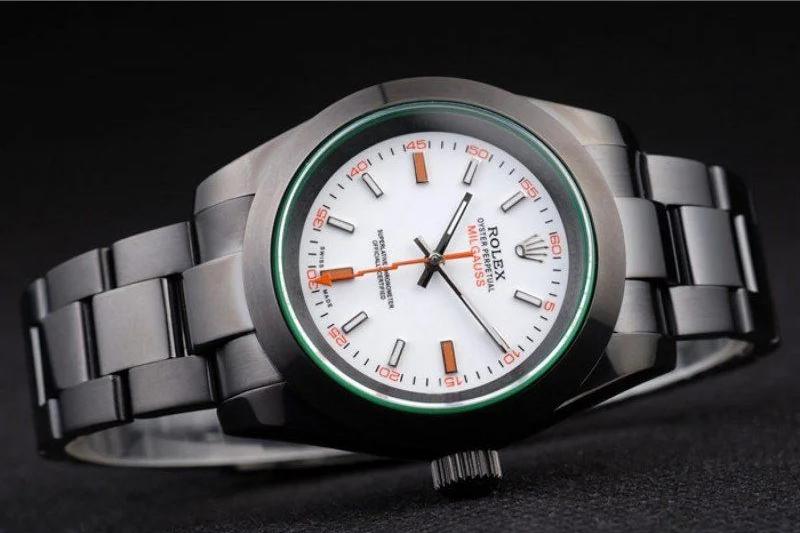
Models like the Milgauss (discontinued in 2023) or specific ceramic Submariner variations become rare shortly after discontinuation. These are frequently found on global marketplaces like Chrono24 or through regional specialists who focus on “recent vintage” pieces. The left-handed GMT-Master II “Destro” is another example where specialized dealers are the most reliable source due to extremely limited initial production.
Navigating Risks: Authentication and Due Diligence
The pursuit of rare Rolexes is fraught with risk. The high values involved attract sophisticated counterfeiters who can replicate everything from the case to the movement. Whether buying from an auction house, a dealer, or a private seller, due diligence is non-negotiable.
- Verify the Seller: Stick to reputable entities. Look for memberships in organizations like the AACD (Association of Accredited Clock and Watch Dealers) or similar bodies that promote consumer safety. Dealers with physical showrooms and long-standing reputations (like Gallery Rare or Bob’s Watches) offer greater security than anonymous online listings.
- Request Documentation: Always ask for the original box, papers, and service history. For vintage pieces, an extract from the archives from Rolex can confirm the original configuration and delivery date.
- Third-Party Authentication: For high-value transactions, consider using a third-party authentication service. Many top dealers already perform rigorous internal inspections, often collaborating with professional workshops and Rolex experts, but an independent opinion adds an extra layer of confidence.
- Understand the Market: Prices for rare Rolexes fluctuate based on trends, condition, and provenance. Research recent auction results and comparable listings to ensure you are paying a fair market price.
Conclusion: The Hunt is Part of the Allure
Finding the rarest Rolex models on the market today is less about shopping and more about hunting. It requires patience, knowledge, and access to the right networks. Whether you are drawn to the historical gravitas of a vintage “Double Red” Sea-Dweller, the vibrant exclusivity of a modern “Rainbow” Daytona, or the understated rarity of a “tropical” dial Datejust, the path to ownership leads through a select group of elite auction houses, trusted specialized dealers, and global marketplaces.
While the prices for these timepieces can be staggering, reflecting their status as both luxury items and investment-grade assets, the true value lies in their scarcity and the stories they tell. For the serious collector, securing one of these rare pieces is not just a transaction; it is an entry into an exclusive circle of horological appreciation. As supply remains constrained and demand continues to grow globally, the allure of the rare Rolex shows no sign of diminishing. For those ready to take the plunge, the key is to start with reputable sources, prioritize authenticity, and understand that in the world of rare Rolexes, the best finds often come to those who wait—and know exactly where to look.
Disclaimer: Prices and availability mentioned in this article are subject to market fluctuations. Always conduct thorough research and consult with professionals before making significant investments in luxury timepieces.
Leave a Reply