
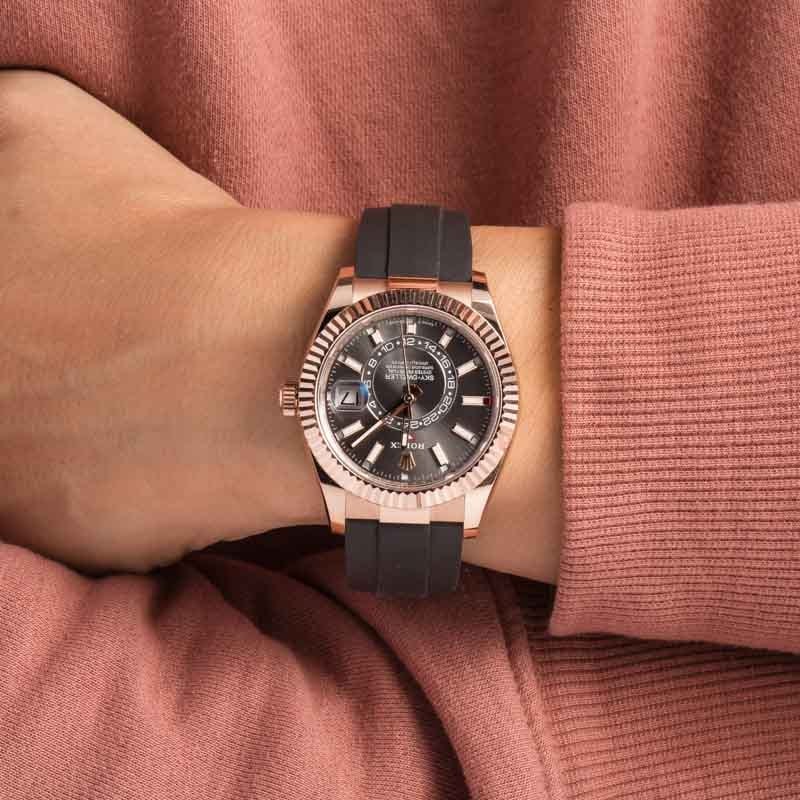
In the intricate world of luxury assets, few items command the same level of reverence, recognition, and financial resilience as a Rolex watch. For decades, the green crown logo has symbolized more than just precision timekeeping; it represents a legacy of engineering excellence, status, and, increasingly, a formidable store of value. While the allure of purchasing a brand-new timepiece from an authorized dealer is undeniable, a shifting landscape in the luxury market has illuminated a more strategic path for the savvy investor: the pre-owned market.
The notion of buying “used” luxury goods often carries a stigma of depreciation, akin to driving a new car off the lot. However, the dynamics of the high-end watch market, particularly concerning Rolex, operate on an entirely different set of economic principles. Buying a pre-owned Rolex is not merely a cost-saving measure; it is a calculated financial decision that allows investors to bypass the initial volatility of the primary market, access rare and discontinued references, and acquire tangible assets that have historically outperformed traditional investment vehicles like stocks and bonds over specific periods.
This comprehensive guide delves deep into why acquiring a pre-owned Rolex is arguably one of the smartest moves a collector or investor can make in the current economic climate. From avoiding initial depreciation to understanding the nuances of “box and papers,” we will explore the multifaceted benefits of entering the secondary market.
The Depreciation Myth: Escaping the Initial Value Drop
One of the most compelling arguments for purchasing a pre-owned Rolex is the ability to circumvent the immediate depreciation that affects almost all consumer goods, and even some luxury items, the moment they are purchased new. When you buy a new Rolex at an authorized dealer, you are paying the full Manufacturer’s Suggested Retail Price (MSRP). However, the moment that transaction is complete, the watch enters the secondary market. While Rolex is famous for holding its value better than almost any other brand, certain models—particularly those that are not part of the highly coveted “Professional” line or those produced in higher volumes—can experience a slight dip in value initially before stabilizing.
By opting for a pre-owned piece, you allow the original owner to absorb that initial hit. The pre-owned market acts as a filter, where the steepest part of the depreciation curve has already been navigated. A pre-owned Rolex has effectively “proven” its value retention capabilities. You are purchasing an asset that has already stabilized, meaning your entry point is often significantly lower than the retail price of a comparable new model, yet the potential for appreciation remains intact. This immediate equity position is a fundamental advantage that new buyers simply do not have.
Furthermore, the pricing structure of the pre-owned market is often more transparent and reflective of true market demand rather than artificial retail pricing. In the primary market, scarcity is manufactured through waiting lists and allocation policies. In the secondary market, price is dictated purely by supply and demand. If a specific reference is highly sought after, its pre-owned price reflects that immediately. Conversely, if a model is less popular, the preowned price adjusts accordingly, offering a fair entry point that respects the buyer’s capital.
Access to the Unobtainable: Discontinued and Vintage Models
Perhaps the most exciting aspect of the pre-owned market is the access it grants to timepieces that are no longer in production. Rolex, like many luxury manufacturers, frequently updates its catalog, discontinuing references to make way for new iterations. Once a model is discontinued, it vanishes from authorized dealers forever. For collectors and investors, these discontinued models often become the “holy grails” of the market.
Consider the legendary “Hulk” Submariner (reference 116610LV) with its green bezel and green dial, or the “Kermit” (reference 16610LV) with its green bezel and black dial. These models are no longer available new. The only way to own one is through the pre-owned market. As supply becomes fixed and demand continues to grow among enthusiasts who missed the initial release, the values of these discontinued pieces tend to skyrocket. Investing in a pre-owned discontinued model is akin to buying a limited edition print; the supply is finite, and as time goes on, the rarity drives the price upward.
Beyond modern discontinuations, the pre-owned market is the gateway to vintage Rolex history. Watches from the 1950s, 60s, and 70s offer a character and craftsmanship that modern mass-production techniques sometimes struggle to replicate. Vintage dials develop a unique patina, a creamy aging of the luminous material that collectors prize above all else. A vintage Submariner or GMT-Master with an original “tropical” dial or a “ghost” bezel (where the aluminum insert has faded to a unique hue) commands prices far exceeding their original retail value, often reaching astronomical figures at auction. These pieces are not just watches; they are historical artifacts, and their value is underpinned by their irreproducibility.
Immediate Availability: Bypassing the Waiting List
In recent years, the difficulty of purchasing a popular Rolex model new from an authorized dealer has become legendary. Models like the Cosmograph Daytona, the GMT-Master II “Pepsi,” and the standard Submariner Date often come with waiting lists that span years, if they are available to the general public at all. Authorized dealers prioritize clients with extensive purchase histories, leaving the average consumer in a state of limbo.
The pre-owned market eliminates this frustration entirely. It offers immediate gratification. If you want a stainless steel Daytona today, you can find one on the secondary market. While you will likely pay a premium over the retail price due to the high demand and low supply, you are paying for the privilege of immediate ownership. For an investor, time is money. The opportunity cost of waiting three years for a watch that might appreciate during that time is significant. By buying pre-owned watches, you secure the asset immediately, allowing it to start working for your portfolio right away. Furthermore, the pre-owned market offers a vastly wider selection. You are not limited to what your local dealer has in stock or what they are willing to allocate to you; you have access to a global inventory of every reference ever made.
The “Blue-Chip” Performance of Steel Sports Models
When discussing Rolex as an investment, it is crucial to understand which models drive the market. Not all Rolexes are created equal in terms of financial performance. The “Blue-Chip” stocks of the watch world are undoubtedly the stainless steel professional models. Historically, these watches have shown the most consistent and aggressive appreciation.
The Cosmograph Daytona stands at the pinnacle. Originally designed for race car drivers, its association with motorsport legend Paul Newman transformed it into a cultural icon. Stainless steel Daytonas frequently trade at double or even triple their retail price on the secondary market. The scarcity of steel Daytonas compared to their gold or two-tone counterparts creates a supply-demand imbalance that keeps values incredibly robust.
Similarly, the GMT-Master II, originally designed for pilots traveling across time zones, has become a fashion and investment staple. References with bi-color bezels, such as the “Pepsi” (red and blue), “Batman” (black and blue), and “Root Beer” (brown and black), are perpetually in demand. These watches are not just tools for tracking time; they are statements of style that have proven to hold value exceptionally well.
The Submariner, the archetypal dive watch, rounds out the “Holy Trinity” of Rolex investment pieces. Its design is so timeless that it has remained largely unchanged for decades, ensuring that even older models remain desirable. The Submariner is perhaps the most recognized luxury watch on the planet, guaranteeing a liquid market should you ever decide to sell. While dress models like the Datejust also hold value well and offer steady growth, the sports models in stainless steel are generally considered the safest and most lucrative bets for pure investment purposes.
The Critical Importance of Originality and Condition
Investing in pre-owned Rolexes requires a keen eye for detail, specifically regarding condition and originality. In the world of vintage and collectible watches, “originality” is king. A watch that retains all its factory-original components—the dial, hands, bezel, and bracelet—is infinitely more valuable than one that has been refurbished with service parts, even if the refurbished watch looks newer.
Collectors prize the “honesty” of a watch. A dial that has developed a warm, creamy patina due to the natural aging of tritium lume is worth significantly more than a dial that has been replaced with a fresh, stark white service dial. Similarly, an “unpolished” case—one that has never been buffed by a polishing wheel during a service—retains its sharp factory edges and chamfers. Polishing removes metal and softens the lines of the watch, effectively erasing its history and reducing its value to serious collectors. When buying pre-owned, looking for an unpolished example with original components is a strategy that protects your investment and ensures maximum resale potential down the line.
Condition also plays a pivotal role. A watch in “Like New” or mint condition will always command a premium over one with heavy wear, scratches, or dents. However, there is a nuance here: light wear that indicates the watch was worn and enjoyed is often acceptable, provided the structural integrity of the case remains. The key is to avoid watches that have been poorly serviced or damaged. This is why purchasing from reputable dealers who specialize in certified pre-owned (CPO) watches is essential. These dealers perform rigorous inspections to verify authenticity and condition, giving investors peace of mind that they are acquiring a sound asset.
The Power of “Box and Papers”
In the secondary market, a Rolex is rarely just a watch; it is a package deal. The presence of the original box, warranty card (papers), hang tags, and manuals—collectively known as “box and papers”—can increase the value of a watch by 15% to 25%, and sometimes even more for rare vintage pieces. These items serve as the watch’s birth certificate and passport.
The warranty card confirms the model, serial number, and date of purchase, providing an unbroken chain of provenance. It assures the buyer that the watch is genuine and not a stolen or counterfeit item. The original box adds to the completeness of the set, appealing to collectors who value the full experience of ownership. A “naked” watch (one without box or papers) is harder to sell and typically fetches a lower price because it introduces a degree of uncertainty. For the smart investor, insisting on a “full set” is a simple way to ensure liquidity and maximize future returns. It signals to the market that the previous owner was meticulous and that the watch has been cared for properly.
Sustainability and the Circular Economy
Beyond the financial metrics, buying pre-owned aligns with the growing global emphasis on sustainability. The concept of the “circular economy” is gaining traction in the luxury sector, where extending the life of high-quality goods is seen as an environmentally responsible choice. Manufacturing a new watch requires significant resources, from mining precious metals to producing complex mechanical movements. By purchasing a pre-owned Rolex, you are participating in a sustainable cycle that reduces the demand for new production and minimizes waste.
Rolex watches are built to last for generations. They are engineered with durability in mind, using materials like 904L stainless steel and proprietary gold alloys that resist corrosion and wear. A pre-owned Rolex that is 20 or 30 years old is often still running perfectly, a testament to its build quality. Choosing to buy used honors this longevity, allowing the watch to continue its journey with a new owner rather than sitting idle or being scrapped. For the modern consumer, this combination of financial prudence and environmental consciousness adds an extra layer of value to the investment.
Market Dynamics: A Hedge Against Inflation
In times of economic uncertainty and high inflation, investors often flock to tangible assets. Unlike fiat currency, which can lose purchasing power due to inflationary pressures, or digital assets, which can be volatile, physical luxury goods like Rolex watches have historically served as a hedge. The value of a Rolex is denominated in global currency but anchored in its brand prestige and utility. As the cost of living rises, the nominal price of luxury goods often rises with it, preserving the real value of the asset.
Rolex’s strategy of controlled scarcity further supports this. By deliberately limiting production below the level of demand, Rolex ensures that their products remain exclusive and desirable. This artificial scarcity, combined with annual price increases on new models, creates a rising tide that lifts the value of pre-owned pieces as well. When the retail price of a new Submariner goes up, the value of a pre-owned one naturally follows suit. This dynamic makes Rolex watches a unique asset class that combines the enjoyment of a luxury good with the defensive characteristics of a store of value.
The Rise of Certified Pre-Owned Programs
The landscape of the pre-owned market has been revolutionized by the introduction of Certified Pre-Owned (CPO) programs. Recognizing the immense value and size of the secondary market, Rolex itself has begun to certify pre-owned watches through select authorized dealers. These watches undergo a rigorous inspection process by Rolex-trained technicians, are serviced if necessary, and come with a fresh two-year international warranty.
This move by the brand has legitimized the pre-owned market in the eyes of hesitant buyers. It removes the fear of counterfeits and ensures a standard of quality that was previously left to individual dealers. For the investor, CPO watches represent the safest possible entry point into the pre-owned market. While they may command a slightly higher premium than non-certified examples, the added security of a factory-backed warranty and the guarantee of authenticity provide invaluable peace of mind. It bridges the gap between the new and used markets, offering the best of both worlds: the value retention of a pre-owned piece with the security of a new purchase.
Conclusion: Time as an Ally
Buying a pre-owned Rolex is more than just acquiring a luxury accessory; it is a strategic decision that blends financial intelligence with a passion for horology. It allows investors to sidestep the pitfalls of initial depreciation, gain immediate access to rare and iconic models, and participate in a market that has consistently demonstrated resilience and growth. Whether you are drawn to the sporty elegance of a Submariner, the racing heritage of a Daytona, or the travel-ready functionality of a GMT-Master, the pre-owned market offers a pathway to ownership that is both economically sound and deeply rewarding.
As we navigate an era of economic flux and changing consumer values, the pre-owned Rolex stands out as a beacon of stability. It is a tangible piece of history, a marvel of engineering, and a proven store of wealth. By understanding the nuances of condition, originality, and market dynamics, the smart investor can turn the passage of time into their greatest ally. In the end, a pre-owned Rolex does not just tell the time; it preserves value, tells a story, and offers a legacy that can be passed down through generations. In a world of fleeting trends, that is an investment worth making.
Ready to Start Your Collection?
Whether you are looking for a specific vintage reference or a modern classic, navigating the pre-owned market requires expertise and trust. Ensure your investment is protected by dealing with reputable specialists who prioritize authenticity and transparency. The perfect timepiece is waiting for you, and with the right knowledge, it could be the smartest investment you ever make.
Leave a Reply