
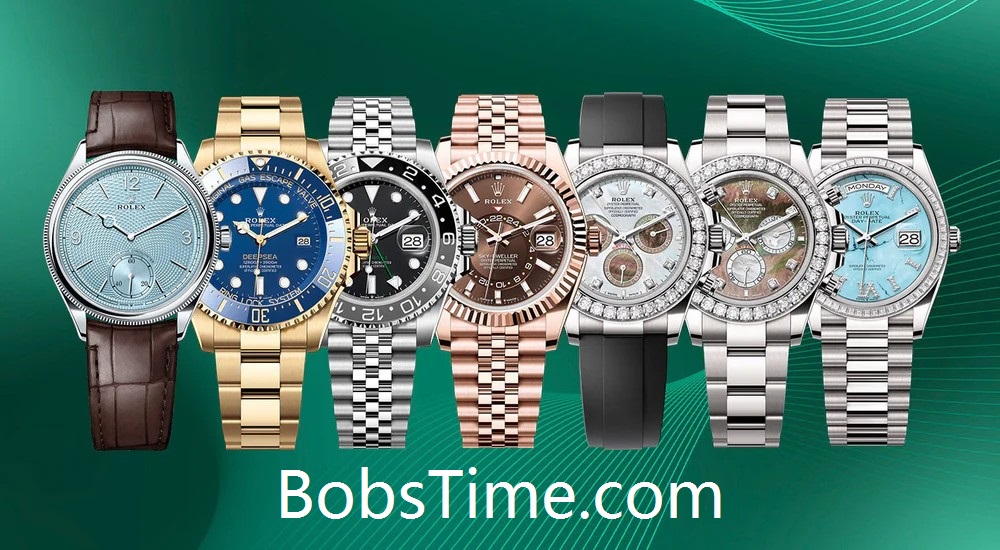
In the digital age, the pre-owned luxury watch market has exploded in popularity, offering collectors and enthusiasts unprecedented access to iconic timepieces from Rolex, Cartier, Omega, and other prestigious brands. Online marketplaces, specialist retailers, and private sellers make it easier than ever to find your dream watch—yet this convenience comes with a critical caveat: the risk of purchasing a counterfeit. Modern replicas, including so-called “super-clones Watches,” have become alarmingly sophisticated, capable of fooling even casual watch lovers with their attention to external detail. For online buyers, who lack the ability to inspect a watch in person before purchase, mastering the art of luxury watch authentication is not just a skill—it is an essential safeguard for your investment. This comprehensive guide will walk you through every step of authenticating a luxury watch online, from verifying serial numbers and examining movement mechanics to vetting sellers and spotting the subtle red flags that counterfeiters always fail to hide. Whether you’re a first-time luxury watch buyer or a seasoned collector expanding your portfolio, these strategies will empower you to shop online with confidence and ensure that every timepiece you acquire is a genuine horological masterpiece.
Why Online Luxury Watch Authentication Matters More Than Ever
The pre-owned luxury watch market is a thriving industry, driven by collectors seeking rare vintage pieces, savvy buyers looking for value compared to retail prices, and enthusiasts drawn to the craftsmanship of Swiss horology. According to market trends, iconic models from established brands retain and often appreciate in value, making authenticated pre-owned watches a smart investment. However, the rise of online sales has created a breeding ground for counterfeiters, who capitalize on the lack of in-person inspection and the demand for high-end timepieces. Counterfeits range from obvious fakes with shoddy craftsmanship to super-clones that mimic the look of genuine watches so closely they can trick even experienced buyers at a glance. For online purchasers, the stakes are high: a counterfeit luxury watch not only represents a significant financial loss but also lacks the quality, durability, and investment value of a genuine piece. What’s more, counterfeiters are constantly evolving their techniques, making it essential for buyers to stay informed about the latest authentication methods and red flags. By taking the time to authenticate a watch before buying online, you protect yourself from fraud, ensure you’re getting what you pay for, and preserve the integrity of your luxury watch collection.
Unlike shopping in a physical showroom, online watch buying means you rely on photos, descriptions, and seller communication to evaluate a timepiece. This makes it crucial to be meticulous, ask the right questions, and use every available tool to verify authenticity. The good news is that even the most sophisticated counterfeits have telltale flaws—flaws that become obvious when you know what to look for. From the precision of engravings to the smoothness of the movement, every detail of a genuine luxury watch reflects the brand’s commitment to Swiss craftsmanship. Counterfeiters, by contrast, cut corners on materials, finishing, and mechanics, leaving behind subtle (and not-so-subtle) signs of inauthenticity. This guide will break down these details into actionable steps, giving you the knowledge to spot a fake and confirm a genuine watch—even when you’re shopping from a screen.
1. Start with Thorough Brand and Model Research
Before you even begin evaluating a specific watch listing, the single most important step in online authentication is **researching the brand and model you’re interested in**. Genuine luxury watches have trademark design elements, specifications, and manufacturing details that are unique to each brand and model—details that counterfeiters often get wrong, even in high-quality replicas. By familiarizing yourself with these hallmarks, you’ll be able to spot inconsistencies in a seller’s photos or description immediately, saving you time and avoiding potential fraud.
What to research for your target watch:
- Trademark design features: Every luxury brand has iconic details that define its watches. For example, Rolex’s Cyclops lens (a 2.5x magnifying glass over the date window) is perfectly aligned and distortion-free on genuine models; Cartier’s Tank features a rectangular case with a railroad-track dial and blued steel hands; Omega’s Speedmaster has a tachymeter scale on the bezel and a distinctive chronograph layout. Note these details and compare them to the seller’s photos.
- Specifications: Official brand websites list exact specifications for every model, including case size, material (e.g., 18k gold, Oystersteel, stainless steel), bracelet type, dial color, and movement caliber. A counterfeit watch may have a slightly wrong case size, inferior material, or a bracelet that doesn’t match the official model—all easy red flags if you’ve done your research.
- Serial number placement: Each brand has a specific location for serial numbers and reference numbers (e.g., Rolex places serial numbers on the rehaut [inner bezel] for post-2010 models, between the lugs at 6 o’clock for pre-2005 models). Knowing where these numbers should be will help you verify if the seller’s photos show them in the correct spot.
- Manufacturing eras: Vintage watches have period-specific details that modern replicas can’t replicate accurately. For example, a 1950s Rolex Turn-O-Graph has a distinct case shape and dial printing that differs from a modern version. Research the production history of vintage models to spot anachronistic details in counterfeits.
Where to find reliable research sources: Stick to official brand websites, reputable horological publications (e.g., Hodinkee, WatchTime), and established pre-owned watch retailers (e.g., Gray & Sons, Windsor Jewelers). These sources provide accurate, up-to-date information about luxury watch models, specifications, and authentication markers. Avoid unregulated forums or social media groups, where misinformation is common.
By investing time in research, you build a mental “blueprint” of the genuine watch. This blueprint will be your most powerful tool when evaluating online listings, as it allows you to spot even the smallest inconsistencies that signal a counterfeit.
2. Verify the Serial and Reference Numbers—The Watch’s “Fingerprint”
Every genuine luxury watch has a **unique serial number** and a **reference number**—the two most important identifiers for authentication. The serial number is assigned by the manufacturer and acts as the watch’s unique fingerprint, linking it to its production year, model, and specifications. The reference number identifies the exact watch model (e.g., Rolex Submariner 1680, Omega Speedmaster 311.30.42.30.01.005). For online buyers, verifying these numbers is non-negotiable: it is the only way to confirm that the watch matches the brand’s official records—and it is a step that counterfeiters cannot replicate perfectly.
Step 1: Locate the Numbers in the Seller’s Photos
First, ensure the seller provides clear, high-resolution photos of the serial and reference numbers. Genuine luxury brands place these numbers in specific, consistent locations:
- Rolex: Pre-2005 – between the lugs at 6 o’clock (requires bracelet removal); 2005–2010 – both between the 6 o’clock lugs and on the rehaut (inner bezel) with “ROLEX ROLEX” engraving; 2010–present – only on the rehaut, as a randomized alphanumeric sequence.
- Cartier: Typically on the case back, engraved deeply and precisely, often alongside the brand logo and metal purity marks (e.g., 750 for 18k gold).
- Omega: On the case back or between the lugs, with the reference number often engraved on the inner case back and the serial number on the outer.
If a seller refuses to provide photos of the numbers, or the photos are blurry, out of focus, or taken at an angle that hides details—**this is a major red flag**. Counterfeiters often avoid showing clear photos of serial numbers because they are either missing, duplicated (counterfeits use the same serial number for batches of watches), or engraved poorly.
Step 2: Inspect the Quality of the Engravings
Genuine serial and reference numbers are **deep, crisp, and precisely engraved** with a consistent font that matches the brand’s specifications. The metal around the engravings is smooth, with no burrs, smudges, or unevenness. Counterfeiters, by contrast, struggle to replicate this precision: their engravings are often **shallow, blurry, uneven, or laser-etched** (laser engraving lacks the depth and texture of genuine mechanical engraving). The font may be slightly wrong, the numbers may be misaligned, or there may be gaps between digits—all small details that jump out when you compare the photos to official brand examples.
For example, a genuine Rolex serial number on the rehaut is engraved in a fine, consistent font with perfect spacing between letters and numbers. A counterfeit version may have a thicker font, uneven spacing, or engravings that look “painted on” rather than etched into the metal. Even super-clones often fail at engraving quality, as the precision required to match the brand’s standards is prohibitively expensive for counterfeiters to replicate.
Step 3: Cross-Reference the Numbers with the Manufacturer’s Database
Once you have clear photos of the serial and reference numbers, the next step is to **cross-reference them with the brand’s official database**. Most luxury watch brands (including Rolex, Omega, and Cartier) offer serial number verification services for genuine customers, either through their official websites, authorized dealers, or customer service teams. This step confirms that the serial number is associated with the exact model the seller is listing, matches the production year, and has not been reported as stolen or counterfeit.
Note: Some brands limit serial number verification to authorized dealers only (e.g., Rolex does not offer public online verification). In this case, ask a reputable authorized dealer to check the numbers for you—most will do this for a small fee or for free if you are a potential customer. You can also use third-party authentication services (discussed later) to verify the numbers.
If the numbers do not match the brand’s records, or the brand cannot find the serial number in its database—**the watch is counterfeit**. Counterfeiters often use fake serial numbers or duplicate numbers from genuine watches, so cross-referencing is the only way to confirm legitimacy.
Key Red Flags for Serial/Reference Numbers:
- Missing or blurry photos of the numbers.
- Shallow, uneven, or laser-etched engravings.
- Numbers in the wrong location (e.g., a post-2010 Rolex with a serial number between the lugs).
- Serial number that does not match the brand’s official records.
- Duplicated serial numbers (you can check this by searching the number online—if it appears on multiple watch listings, it’s a fake).
3. Scrutinize Every Visual Detail in the Seller’s Photos
For online buyers, **high-resolution photos are your window into the watch’s authenticity**. Genuine luxury watches are crafted with obsessive attention to detail—every component, from the dial to the bracelet, is executed with perfect precision. Counterfeiters, even the makers of super-clones, cannot replicate this level of craftsmanship; they inevitably cut corners on small details that reveal the watch is a fake. By examining the seller’s photos with a critical eye (and using zoom tools), you can spot these details and confirm the watch’s authenticity. Below is a breakdown of the most important visual elements to inspect, with red flags to watch for.
Dial and Luminous Materials
The dial is the face of the watch—and one of the easiest places to spot a counterfeit. Genuine luxury watch dials feature **flawless printing, perfectly aligned markers, and brand-specific fonts** that are crisp and consistent. The luminous material (lume) on the hands and markers is applied evenly, with no smudges, gaps, or unevenness, and glows uniformly in the dark (ask the seller for photos of the lume in low light). Counterfeit dials, by contrast, have a host of flaws:
- Blurry or smudged printing (e.g., brand logos, numerals, or text like “Swiss Made”).
- Misaligned markers (e.g., hour markers that are off-center or unevenly spaced).
- Incorrect fonts (e.g., a Rolex logo with the wrong curvature, or Omega’s “Seamaster” text in a non-brand font).
- Poor lume application (smudges, gaps, or lume that is too bright/dull and does not glow uniformly).
- Spelling errors (e.g., “Swis Made” instead of “Swiss Made”—a common counterfeit mistake).
Another key detail: **sapphire crystal**. All genuine luxury watches use scratch-resistant sapphire crystal, which has a subtle violet tint at certain angles and is impossible to scratch with a metal object (ask the seller if they can provide a photo of the crystal at an angle to show the tint). Counterfeits often use mineral glass or plastic, which lacks the violet tint and is easily scratched—if the seller’s photos show scratches on the crystal, or the crystal looks “plastic-y,” it’s a fake.
Case, Bezel, and Bracelet
Genuine luxury watch cases and bracelets are made from **premium materials** (18k gold, Oystersteel, stainless steel, platinum) that give the watch a substantial, balanced weight—even in photos, you can see the quality of the metal (it has a rich, polished finish with no discoloration or cheap plating). The case and bezel are machined with perfect precision: the edges are smooth and beveled, the gaps between the case and bracelet are minimal, and the bezel rotates smoothly (for dive watches like the Rolex Submariner or Omega Seamaster) with no play or resistance.
Counterfeit case/bracelet red flags:
- Lightweight or cheap-feeling metal (plating that is peeling or discoloring, or a “tinny” look to the steel).
- Rough or uneven edges on the case or bezel (no smooth beveling).
- Large gaps between the case and bracelet, or a bracelet that does not fit snugly.
- A bezel that is hard to rotate, has play, or features misaligned markings (e.g., a dive watch bezel with incorrect minute numerals).
- Poor polishing (scratches, smudges, or a dull finish on the metal).
For brands with signature case details (e.g., Cartier’s rounded case edges, Rolex’s Oyster case with a screw-down crown), ensure these details match the official model exactly. Counterfeits often have slightly misshapen case shapes or incorrect crown designs—details that are obvious when you compare the photos to official brand images.
Logos and Brand Markings
Genuine luxury watch logos (e.g., Rolex’s coronet, Cartier’s double C, Omega’s omega symbol) are **deeply engraved, perfectly proportioned, and aligned** with no smudges or unevenness. They are often placed in specific locations (e.g., Rolex’s coronet on the crown, Cartier’s logo on the case back) and match the brand’s official logo design exactly. Counterfeit logos are the most common red flag: they are often shallow, blurry, misaligned, or the wrong shape/size. For example, a counterfeit Rolex coronet may have uneven points, or a Cartier double C may be lopsided. Even small details, like the size of the logo relative to the case or dial, can reveal a fake.
Complications (Chronographs, Date, Moon Phases)
If the watch has **complications** (advanced features like chronographs, perpetual calendars, date windows, or moon phase displays), these are critical to inspect. Genuine luxury watch complications are **precision-engineered to function flawlessly**: the date changes instantly at midnight, chronograph subdials track time accurately, and moon phases align perfectly with the lunar cycle. The seller should provide photos and videos of the complications in action—if they refuse, this is a red flag.
Counterfeit complication red flags:
- Subdials that are decorative only (they do not move or track time).
- A date window that changes slowly (over hours, not instantly at midnight) or is misaligned.
- Chronograph pushers that are hard to press, or a chronograph that does not start/stop/reset accurately.
- Moon phase displays that are incorrect or do not align with the lunar cycle.
Even super-clones struggle to replicate functional complications, as the precision engineering required is far too complex and expensive. A watch with non-functional or poorly functioning complications is almost always a counterfeit.
4. Evaluate the Movement—The “Heart” of the Watch
The **movement** (the internal mechanical mechanism that powers the watch) is the single most reliable indicator of a luxury watch’s authenticity—*and it is the one component counterfeiters can never replicate perfectly*. Genuine luxury watch movements are works of art: they are handcrafted in Switzerland, feature intricate decorative finishing (e.g., Geneva stripes, perlage, mirror-polished edges), and are built with proprietary materials and technology (e.g., Rolex’s Parachrom hairspring, Omega’s Co-Axial escapement). Counterfeit movements, by contrast, are cheap, mass-produced, and lack the finishing, precision, and functionality of genuine movements. For online buyers, evaluating the movement requires **clear photos/videos of the movement** (either through a display case back or from the seller opening the case back) and an understanding of the brand’s genuine movement specifications.
What to Look for in a Genuine Luxury Movement
Every luxury brand has signature movement features that are unique to their calibers (the specific movement model). For example, Rolex movements (e.g., 3135, 3235) feature:
- **Decorative finishing**: Geneva stripes on the bridges, perlage (tiny circular engravings) on the base plates, and mirror-polished (black polish) edges on all components.
- **Precise engravings**: The brand name, caliber number, and “Swiss Made” are deeply engraved on the bridges and rotor (the oscillating weight that winds the watch automatically).
- **High-quality components**: Synthetic ruby jewels (used to reduce friction) that are precisely aligned and set in gold or platinum settings; a bi-directional Perpetual rotor with a centered, crisp Rolex coronet.
- **COSC certification**: All genuine Rolex mechanical movements are certified by the Official Swiss Chronometer Testing Institute (COSC), meaning they meet strict accuracy standards (-2/+2 seconds per day).
- **Smooth operation**: The rotor spins silently and smoothly, the seconds hand glides continuously (no ticking), and winding the watch feels refined (no grit or resistance).
Omega movements feature Co-Axial escapements, rhodium plating, and decorative finishing like Geneva stripes and perlage, while Cartier movements have brand-specific engravings and finishing that reflect the brand’s French design aesthetic. Regardless of the brand, genuine luxury movements share one key trait: **obsessive attention to detail**. Every component is perfectly machined, every engraving is crisp, and every finish is flawless—there are no shortcuts, no rough edges, and no cheap materials.
Counterfeit Movement Red Flags
Even the best super-clone movements have obvious flaws that reveal they are fake. These flaws are easy to spot in clear photos/videos:
- **Lack of decorative finishing**: No Geneva stripes, perlage, or mirror-polished edges— the bridges and plates are plain, unpolished metal with a grainy or rough finish.
- **Poor engravings**: Shallow, blurry, or misaligned engravings of the brand name, caliber number, or logo; the rotor logo may be off-center or faded.
- **Cheap components**: Plastic or low-quality metal jewels (instead of synthetic rubies) that are misaligned or dull; a rotor that is made of cheap metal and spins noisily or roughly.
- **Incorrect caliber**: The movement caliber number does not match the brand’s official caliber for the watch model (e.g., a Rolex Submariner with a non-Rolex caliber).
- **Rough operation**: The seconds hand ticks (instead of gliding), winding the watch feels gritty or uneven, or the rotor makes excessive noise (genuine luxury movements are nearly silent).
- **Tool marks**: Visible machining marks or burrs on the bridges and plates—genuine movements are completely free of tool marks.
A critical note for online buyers: **never buy a luxury watch online if the seller refuses to provide photos/videos of the movement**. Counterfeiters will always avoid showing the movement, as it is the easiest way to expose their fake. If the seller claims the case back cannot be opened (e.g., for water resistance), this is a lie—authorized watchmakers can open any case back safely, and a reputable seller will do this to prove the watch’s authenticity.
5. Vet the Seller—The Most Overlooked Authentication Step
For online luxury watch buyers, **vetting the seller is just as important as vetting the watch itself**. A reputable seller will provide clear photos, detailed descriptions, and transparent information about the watch’s provenance (history), condition, and authentication. A fraudulent seller, by contrast, will have red flags in their profile, listing, and communication that reveal they are selling counterfeits. Taking the time to research the seller will eliminate 90% of the risk of buying a fake watch online—yet it is the step most buyers skip. Below is how to vet every type of online seller, from specialist retailers to private individuals on marketplaces like eBay or Chrono24.
Specialist Pre-Owned Watch Retailers
Specialist retailers (e.g., Gray & Sons, Windsor Jewelers, Bob’s Time) are the safest place to buy a pre-owned luxury watch online, as they guarantee authenticity and conduct rigorous in-house authentication on every watch. To vet a specialist retailer:
- **Check for a physical address and showroom**: Reputable retailers have a brick-and-mortar location (not just a website) and list their address prominently. You can verify the address on Google Maps and check for local business reviews.
- **Look for authentication guarantees**: The retailer should explicitly state that every watch is authenticated by master watchmakers and offer a written guarantee of authenticity. Avoid retailers that do not offer this guarantee.
- **Read customer reviews**: Check independent review sites (e.g., Trustpilot, Google Reviews) for genuine customer feedback. A reputable retailer will have hundreds or thousands of positive reviews, with no pattern of complaints about counterfeit watches.
- **Verify their expertise**: The retailer’s website should feature information about their watchmaking team (e.g., master-trained watchmakers, Swiss-trained experts) and their authentication process. Avoid retailers with no information about their team or process.
Specialist retailers also offer additional protections, like return policies, warranties, and repair services—all of which a fraudulent seller will not provide.
Online Marketplaces (eBay, Chrono24, Facebook Marketplace)
Marketplaces are riskier than specialist retailers, as they allow private sellers and small businesses to list watches with no mandatory authentication. To vet sellers on marketplaces:
- **Check the seller’s feedback score and history**: A reputable seller will have a high feedback score (1000+ positive reviews) and a long selling history (years, not months). Avoid new sellers with no feedback or a low score.
- **Look for verified seller badges**: Many marketplaces (e.g., eBay, Chrono24) offer verified seller badges for sellers who pass identity checks and have a history of positive sales. Prioritize verified sellers.
- **Read the listing carefully**: A genuine seller will provide a **detailed, accurate description** of the watch, including its condition (e.g., “excellent pre-owned, minor wear on the bracelet”), provenance (e.g., “purchased from an authorized Rolex dealer in 2020”), and included items (e.g., original box, papers, service records). A fraudulent seller’s listing will be vague, with no details about the watch’s history or condition.
- **Check for return policies**: A genuine seller will offer a **no-hassle return policy** (e.g., 30 days for a full refund if the watch is not authentic). A fraudulent seller will have a strict “no returns” policy or make excuses for why returns are not allowed.
Private Sellers (Social Media, Forums, Classifieds)
Private sellers are the riskiest option for online watch buying, as there is no third-party protection (e.g., marketplace buyer protection) and no guarantee of authenticity. If you choose to buy from a private seller:
- **Ask for proof of ownership**: The seller should provide original purchase receipts, service records, or a warranty card from an authorized dealer. If they cannot provide these, it is a red flag.
- **Request a video call**: Ask the seller to do a live video call where they show the watch in real time, including the serial numbers, movement, and complications in action. This prevents the seller from using stock photos or photos of a genuine watch to sell a fake.
- **Use a secure payment method**: Never pay with cash, wire transfer, or gift cards—these methods offer no buyer protection. Use a credit card or PayPal, which allow you to dispute the charge if the watch is counterfeit.
Universal Seller Red Flags to Avoid At All Costs
Regardless of the seller type, these red flags always signal a fraudulent listing:
- A price that is **too good to be true** (e.g., a Rolex Submariner for $2,000—retail is $10,000+, pre-owned is $8,000+). Counterfeiters use low prices to lure unsuspecting buyers.
- Refusal to provide clear photos/videos of the serial numbers, movement, or complications.
- Vague or evasive answers to your questions (e.g., “I don’t know the serial number” or “the movement is ‘Swiss made’—that’s all you need to know”).
- Pressure to buy quickly (e.g., “this watch will be gone tomorrow” or “special price only for the next 24 hours”). Fraudulent sellers want you to act before you can authenticate the watch.
- No physical address, phone number, or way to contact the seller outside of the platform.
- Stock photos or stolen photos (you can reverse-image search the listing photos to see if they appear on other websites or brand pages).
If a seller has any of these red flags, **walk away**. There are plenty of reputable sellers online—you never need to take a risk on a suspicious one.
6. Verify the Watch’s Provenance and Documentation
Genuine luxury watches come with **original documentation** that supports their authenticity and adds value to the timepiece. For online buyers, requesting and verifying this documentation is a critical step in authentication, as counterfeiters often provide fake or mismatched paperwork to make their watches seem genuine. A watch’s documentation (also called its “paper trail”) includes the original box, warranty card, purchase receipt, service records, and authentication certificates—all of which should match the watch’s serial and reference numbers exactly.
What to Look for in Genuine Documentation
- **Warranty card**: The most important document for a modern luxury watch. It includes the watch’s serial number, reference number, purchase date, and the stamp of an authorized dealer. The serial and reference numbers on the warranty card must match the numbers on the watch *exactly*—even a single digit difference means the card is fake or mismatched.
- **Original box**: Genuine luxury watch boxes are made of high-quality materials (leather, wood) with the brand’s logo embossed or engraved precisely. The box should include all original inserts (e.g., watch pillows, instruction manuals, warranty booklets) that match the watch model.
- **Service records**: If the watch is pre-owned, it should have service records from an authorized dealer or master watchmaker. These records include the serial number, service date, and details of the work done—they prove the watch has been maintained properly and confirm its authenticity.
- **Authentication certificates**: For pre-owned watches, a reputable seller will provide a certificate of authenticity from a third-party authentication service (e.g., Gray & Sons, Rolex Authorized Service Centers) or their in-house watchmaking team. The certificate should include photos of the watch, serial/reference numbers, and a detailed description of the authentication process.
Counterfeit Documentation Red Flags
Counterfeit documentation is easy to spot if you know what to look for:
- Mismatched numbers: The serial/reference numbers on the paperwork do not match the numbers on the watch.
- Poor quality printing: Blurry logos, smudged text, or cheap paper (genuine brand documentation uses high-quality, thick paper with crisp printing).
- Fake dealer stamps: The warranty card has a stamp from a non-authorized dealer, or the stamp is blurry/fake (you can verify authorized dealers on the brand’s official website).
- Missing information: The warranty card or receipt is missing the purchase date, dealer name, or serial/reference numbers.
- Generic paperwork: The box or instruction manual is for a different brand or model (e.g., a Rolex Submariner with a generic “Swiss watch” box).
A critical note: **lack of documentation does not mean a watch is counterfeit**—many vintage watches or pre-owned watches lose their paperwork over time. However, a watch with no documentation requires more rigorous authentication (e.g., third-party verification) to confirm its legitimacy. A watch with fake or mismatched documentation, by contrast, is almost always a counterfeit.
7. Use Third-Party Professional Authentication (For High-Value Watches)
For high-value luxury watches (e.g., vintage Rolex, Cartier Tank, Omega Speedmaster worth $5,000+), **third-party professional authentication** is the ultimate safeguard for online buyers. Even if you have done your own research and vetted the seller, a professional authentication service will conduct a rigorous, in-person inspection of the watch (once you receive it) using specialist tools (high-powered magnification, UV light, X-ray) and the expertise of master watchmakers. This step is especially important for online buyers, as it provides a **written guarantee of authenticity**—and if the watch is counterfeit, you can use the professional report to dispute the charge with your payment provider or get a refund from the seller.
What to Look for in a Third-Party Authentication Service
- **Certified watchmakers**: The service should employ master-trained, Swiss-trained, or brand-authorized watchmakers with years of experience in luxury watch authentication.
- **Comprehensive inspection**: The service should inspect every component of the watch, including the serial numbers, movement, engravings, materials, and documentation, and provide a detailed report with photos.
- **Written guarantee**: The service should issue a certificate of authenticity that you can use for insurance, resale, and dispute resolution.
- **Transparent pricing**: The service should list its pricing clearly (no hidden fees) and offer different levels of authentication for different watch values (e.g., basic verification for $100, full inspection for $300).
Reputable third-party authentication services include Gray & Sons Jewelers, Rolex Authorized Service Centers, Omega Authorized Service Centers, and independent horological appraisal firms (e.g., the American Society of Appraisers). Most specialist pre-owned watch retailers also offer authentication services for customer-owned watches, for a small fee.
Cost of Professional Authentication
Professional authentication costs vary based on the watch’s brand, model, and value, but typical fees are:
- Basic verification (serial number check, visual inspection): $100–$150 (US) / £80–£120 (UK).
- Full inspection (movement disassembly, material testing, documentation verification): $200–$500 (US) / £150–£350 (UK).
- Vintage watch authentication (additional research into production history): $300–$700 (US) / £250–£500 (UK).
While this is an additional cost, it is a small price to pay for the peace of mind that comes with knowing your high-value watch is genuine. For most online buyers, professional authentication is a worthwhile investment—especially for vintage or rare watches, where the risk of counterfeiting is highest.
Final Tips for Online Luxury Watch Authentication: Trust Your Instincts
After all the research, photo scrutiny, and seller vetting, there is one final step in online luxury watch authentication: **trust your instincts**. If something about the listing, seller, or watch feels off—even if you can’t put your finger on it—walk away. Luxury watch buying is an investment, and you should never feel pressured or uncertain about a purchase. Genuine sellers and genuine watches will check all the boxes: clear photos, accurate descriptions, transparent communication, and a willingness to provide any information you need to confirm authenticity. Counterfeit sellers, by contrast, will leave you with doubts, red flags, and a sense of unease.
Additional final tips to remember:
- **Always use zoom tools**: Most online marketplaces and retailer websites offer zoom tools for photos—use them to inspect every detail of the watch, from the engravings to the movement.
- **Ask for more photos/videos**: If the seller’s photos are not clear enough, or you want to see a specific detail (e.g., the lume in the dark, the chronograph in action), ask for more. A genuine seller will be happy to provide them.
- **Join collector communities**: Online collector communities (e.g., Hodinkee forums, Rolex Forums) are a great resource for online buyers—you can post photos of the watch and ask other collectors for their opinion on its authenticity. Most collectors are happy to help and share their expertise.
- **Inspect the watch immediately upon delivery**: When you receive the watch, inspect it in person right away—check the serial numbers, movement, and details against the seller’s photos. If it is not what you expected, initiate a return immediately (within the seller’s return window).
Conclusion: Authenticate to Protect Your Investment
Buying a luxury watch online is an exciting experience— it opens up a world of rare and iconic timepieces that you may not find in your local showroom. But with this excitement comes responsibility: the responsibility to authenticate the watch and protect your investment from counterfeits. Modern replicas are more sophisticated than ever, but they are not perfect— and with the right knowledge, tools, and diligence, you can spot a fake every time. From researching the brand and verifying serial numbers to scrutinizing photos and vetting sellers, every step of the authentication process is designed to eliminate risk and ensure that the watch you buy is a genuine horological masterpiece.
Remember: luxury watch authentication is not a one-time step—it is a process. It requires patience, attention to detail, and a willingness to ask questions and walk away from suspicious listings. By following the steps in this guide, you will shop online with confidence, build a collection of authentic luxury watches, and enjoy the craftsmanship, beauty, and investment value of these iconic timepieces for years to come. Whether you’re a first-time buyer or a seasoned collector, the key to successful online luxury watch buying is simple: **authenticate first, buy second**.
Leave a Reply