
Replica Watch
In the world of luxury horology, few brands command as much respect—and imitation—as Rolex. With genuine models often carrying price tags exceeding $10,000 and waitlists stretching into years, the market for replica watches has exploded. While some buyers knowingly purchase “super clones” for aesthetic enjoyment, a far larger group of consumers risks being deceived by high-quality fakes passed off as authentic investments.
For the everyday buyer, collector, or gift-giver, the ability to distinguish a genuine timepiece from a replica is no longer just a hobbyist skill; it is a crucial form of consumer protection. The gap between real and fake has narrowed significantly in recent years, with modern replicas utilizing 904L steel, sapphire crystals, and cloned movements that mimic the smooth sweep of a genuine Swiss caliber. However, despite these advancements, telltale signs remain. This guide provides an expert-level breakdown of how to spot a replica watch, ensuring you can navigate the market with confidence and avoid costly mistakes.
The Weight and Feel: The First Line of Defense
One of the most immediate indicators of a watch’s authenticity is its physical presence on the wrist. Genuine Rolex watches are engineered with solid blocks of high-grade 904L Oystersteel, a corrosion-resistant alloy that is denser and more durable than the standard 316L steel used in most replicas.
When you pick up a genuine Submariner or Datejust, it should feel substantial and balanced. The weight distribution is even, and the bracelet links move with a fluid, heavy solidity. In contrast, many replicas, even high-end ones, often feel slightly lighter or “hollow.” This is particularly noticeable in the bracelet; lower-tier fakes may use hollow end-links or thinner metal to cut costs, resulting in a rattling sound or a flimsy feel when the clasp is opened and closed.
Expert Tip: If possible, compare the watch in question against a known genuine model. Close your eyes and focus on the heft. A genuine Rolex feels like a piece of machinery; a fake often feels like jewelry.
The Movement: Listening to the Heartbeat
The movement is the soul of the watch, and it is often where replicas struggle to perfectly emulate the original. Genuine Rolex watches utilize in-house automatic movements (such as the Caliber 3235 or 3135) that are renowned for their precision and the iconic “sweeping” motion of the seconds hand.
The Sweep Test:
Observe the seconds hand. On a genuine Rolex, the hand moves in a continuous, fluid glide, ticking roughly 8 times per second (28,800 beats per hour). On a quartz replica, the hand will tick once per second—a dead giveaway. However, be wary of automatic replicas that also feature a sweeping hand. While they mimic the motion, the quality of the sweep can differ. High-end “super clones” may use modified Chinese or Swiss ETA movements that get close, but they often lack the refined stability of a genuine Rolex.
The Sound Test:
Bring the watch close to your ear. A genuine Rolex movement is incredibly quiet and efficient. You should hear a faint, rhythmic whirring, but no loud ticking. Many replicas, especially those with lower-quality automatic movements, produce a louder, more erratic noise. If the watch sounds like a frantic insect, it is likely a fake.
The Cyclops Lens: A Matter of Magnification
One of the most famous features of the Rolex Datejust and Submariner Date is the Cyclops lens—the small magnifying bubble over the date window. Rolex engineers this lens to magnify the date exactly 2.5 times.
On a genuine watch, the date appears large, crisp, and fills nearly the entire width of the Cyclops window. The magnification is so precise that the date seems to float just beneath the crystal. On many replicas, the magnification is weaker, often only 1.5x or 2x. This makes the date appear smaller and further away. Additionally, check the alignment. On a fake, the Cyclops lens might be slightly off-center or glued on at an angle, whereas on a genuine piece, it is perfectly integrated into the sapphire crystal.
Lighting Check: Shine a light through the Cyclops. On a genuine Rolex with anti-reflective coating, the date remains clear and readable from various angles. On fakes, you may notice a blue or green tint, or significant glare that obscures the date.
Dial Details: The Devil is in the Precision
The dial is the face of the watch, and Rolex maintains microscopic standards for printing and assembly. Under a loupe (a jeweler’s magnifying glass), the differences become stark.
- Printing: Genuine Rolex dials feature sharp, raised printing with perfect spacing between letters. There are no smudges, bleeding edges, or uneven fonts. Replicas often suffer from slightly fuzzy text, especially around the “Swiss Made” at the 6 o’clock position or the brand name at 12 o’clock.
- Lume (Luminosity): Rolex uses Chromalight, a proprietary luminescent material that glows a distinct blue in the dark and lasts for hours. The application is flawless, with no overflow onto the surrounding metal. Replicas often use cheaper Super-LumiNova or generic glow-in-the-dark paint that may appear greenish, fade quickly, or have uneven edges.
- The Coronet: Look closely at the Rolex crown logo at the 12 o’clock position. On a genuine watch, the crown is symmetrical, with five distinct points and a wide base. On fakes, the crown can look distorted, with uneven points or a narrow base.
The Rehaut and Laser-Etched Crown
Modern Rolex watches (post-2005) feature intricate security details that are difficult for counterfeiters to replicate perfectly.
Rehaut Engraving:
The rehaut is the inner ring between the dial and the crystal. On genuine models, the word “ROLEX” is laser-etched repeatedly around this ring, perfectly aligned with the minute markers on the dial. The engraving is fine, deep, and crisp. On replicas, this etching is often shallow, misaligned, or the font is slightly incorrect. In low-quality fakes, the rehaut may be completely blank.
Laser-Etched Crown (LEC):
At the 6 o’clock position on the sapphire crystal, Rolex etches a tiny crown logo. This is extremely difficult to see with the naked eye and requires specific lighting angles to view. On a genuine watch, the LEC is composed of tiny dots and is very subtle. On many replicas, the crown is etched too deeply, is too large, or is easily visible without effort. Some older or cheaper fakes omit this feature entirely.
Case Back and Serial Numbers
A common myth is that all Rolex watches have solid case backs. While this is true for the vast majority of models (Oyster Perpetual, Submariner, Daytona), there are rare exceptions. However, if you encounter a Rolex with a transparent exhibition case back showing the movement, it is almost certainly a fake, unless it is a specific, verified rare model like the Cellini Prince.
Serial and Reference Numbers:
Between the lugs (where the bracelet connects to the case), you will find the serial number (at 6 o’clock) and the reference number (at 12 o’clock). On modern Rolexes, these are laser-etched with a “sandblasted” effect that shines under light. The numbers should be perfectly spaced and deep. On fakes, these engravings are often done with acid etching, appearing shallow, fuzzy, or filled with white paint to make them stand out.
Cross-referencing these numbers is vital. The reference number should match the specific model and year of production. If the serial number indicates a watch made in 2020, but the style and features belong to a 2015 model, you have spotted a discrepancy.
The Bezel and Bracelet Craftsmanship
The tactile experience of the bezel and bracelet offers further clues.
- Bezel Action: On a genuine Submariner or GMT-Master, the bezel rotates with a firm, precise click. There is no “play” or wobble. The ceramic insert (Cerachrom) is flawless, with numerals filled with platinum or gold that never fade. Replicas often have bezels that feel loose, grind rather than click, or have ceramic inserts with colors that are slightly off (e.g., a “Pepsi” bezel where the red looks orange).
- Bracelet Finish: Examine the clasp and the links. Genuine Rolex bracelets have a mix of brushed and polished surfaces that transition seamlessly. The clasp should open and close with a solid, authoritative snap. Inside the clasp, the engraving should be sharp and clean. Fake clasps often feel flimsy, and the safety latch may not engage smoothly.
Documentation and Packaging
While papers and boxes can be faked, they remain an important part of the verification process. Genuine Rolex warranty cards (post-2020) often come with a hologram or a digital chip linked to the watch’s identity. The printing on the card should be crisp, and the dealer’s stamp must be present and legible.
Be skeptical of “too good to be true” deals. If a seller offers a pristine, unworn Rolex at 40% below market value without a verifiable history, the likelihood of it being a replica is extremely high. Authentic luxury watches retain their value; deep discounts are a major red flag.
Conclusion: Vigilance is Key
The market for replica watches is sophisticated, and “super clones” can fool even experienced enthusiasts at a glance. However, by systematically checking the weight, movement, Cyclops magnification, dial finishing, and microscopic details like the rehaut and LEC, you can uncover the truth.
For consumer protection, always buy from authorized dealers or reputable, established pre-owned sellers who offer guarantees of authenticity. If you are ever in doubt, seek a professional appraisal from a certified horologist. Investing in a luxury watch is a significant financial decision, and arming yourself with knowledge is the best way to ensure that your investment is genuine, valuable, and built to last a lifetime. Remember, the goal of these tips is not just to spot a fake, but to appreciate the incredible engineering and craftsmanship that defines a true Rolex.
Users are reminded to comply with all applicable local laws and regulations in their jurisdiction. QW
Showing all 2 resultsSorted by popularity
-
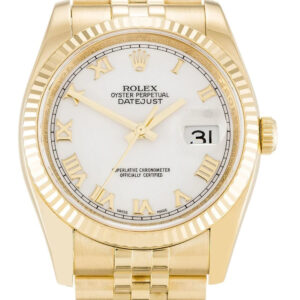
Rolex Datejust White Dial – Replica Watch 116238 36 mm
Price range: $210.00 through $1,099.00 -
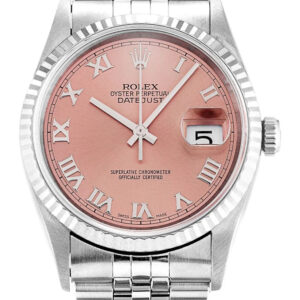
Rolex Datejust Pink Dial – Replica Watch 16234 36 mm
Price range: $210.00 through $1,099.00