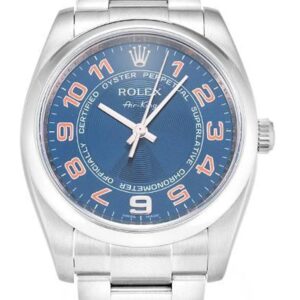
Rolex Air-king Vintage
The Enduring Legacy of the Rolex Air-King: A Vintage Collector’s Guide
In the pantheon of horological icons, few names resonate with the quiet authority and historical depth of the Rolex Air-King. While models like the Submariner, Daytona, and GMT-Master often steal the spotlight with their sporty aesthetics and complex functionalities, the Air-King holds a unique position as the purest expression of Rolex’s core mission: precision timekeeping. For the vintage watch enthusiast, the vintage Rolex Air-King represents an accessible entry point into serious collecting, offering a direct lineage to the golden age of aviation and a design philosophy that prioritizes legibility above all else.
This article explores the rich history, distinctive design elements, and enduring appeal of the Rolex Air-King vintage series, providing a comprehensive guide for collectors seeking to understand why this understated timepiece remains a cornerstone of classic watchmaking.
Aviation Roots: Born from the Sky
The story of the Air-King begins in the 1930s and 1940s, an era when aviation was transitioning from a daring experiment to a vital mode of global transport. Rolex, recognizing the critical need for reliable timekeeping in the cockpit, began producing watches specifically tailored for pilots. The vintage Air-King was not merely a marketing term; it was a tribute to the engineers and aviators who conquered the skies.
Unlike modern iterations that might focus on luxury materials or complex complications, the original Rolex Air-King vintage models were utilitarian tools. They were designed to be read at a glance, even in the turbulent environment of a cockpit. This heritage is deeply embedded in the DNA of every vintage Rolex Air-King produced during the mid-20th century. Collectors today are drawn to this authentic connection to history, owning a piece of machinery that shares its lineage with the aircraft that shaped the modern world.
The “Air-King” designation was part of Rolex’s broader strategy to associate its Oyster Perpetual line with various professions and adventures, including the Sea-Dweller for divers and the Explorer for mountaineers. However, the Air-King remained the most versatile, suitable for both the professional pilot and the everyday gentleman who appreciated precision.
Design Philosophy: The Art of Legibility
The defining characteristic of any vintage Rolex Air-King is its dial. In the world of vintage watches, where ornamentation can sometimes obscure function, the Air-King stands out for its stark, mathematical approach to design. The primary goal was legibility, and Rolex achieved this through a specific arrangement of numerals that has become the model’s signature.
The Distinctive Numeral Layout
Most vintage Air-King references, particularly those from the 1950s through the 1970s (such as the famous Ref. 5500), feature a unique dial layout. Instead of standard indices or uniform numerals, these watches display large, bold Arabic numerals at the 3, 6, and 9 o’clock positions. The remaining hours are marked by simple baton indices or smaller numerals.
This “3-6-9” configuration was not arbitrary; it mirrored the instrument panels of aircraft, where critical data needed to be instantly recognizable. For the men’s Rolex Air-King vintage collector, this dial layout is the holy grail. It creates a visual rhythm that is both balanced and dynamic, drawing the eye immediately to the cardinal points of the dial. Whether it is a Rolex Air-King vintage black dial or a silver variant, the contrast provided by these large numerals ensures that the time can be read in a fraction of a second.
Case Sizes and Proportions
When discussing the Rolex Air-King vintage, size matters. The most coveted references, such as the Ref. 5500, typically come in a 34mm case size. In today’s market of oversized 40mm and 42mm sports watches, a 34mm Rolex Air-King vintage might seem small. However, for the discerning collector, this dimension is perfect. It reflects the elegant proportions of the mid-20th century, allowing the watch to slide effortlessly under a shirt cuff while maintaining a substantial presence on the wrist.
Some earlier or specific transitional models may appear in 36mm, which offers a slightly more modern wrist presence while retaining the classic aesthetic. The choice between a Rolex Air-King vintage 34mm and a 36mm often comes down to personal wrist size and style preference, but both sizes command respect for their historical accuracy and wearability.
The Workhorse Movement: Caliber 1520/1530
Beneath the hood of the vintage Rolex Air-King lies one of the most robust and reliable movements ever produced by the Swiss manufacture: the Caliber 1520 (and its successor, the 1530). Introduced in the late 1960s and used extensively in the Ref. 5500 until the late 1980s, this movement is a testament to Rolex’s engineering prowess.
The Caliber 1520 is a non-chronometer certified movement, which might seem like a drawback to some, but in the context of the Air-King, it is a feature. The Air-King was designed as an entry-level professional watch, and the 1520 provided exceptional reliability without the added cost of chronometer certification. It features a frequency of 19,800 vibrations per hour (vph), known for its stability and ease of service.
For owners of a Rolex Air-King vintage, this movement is a blessing. It is simple, durable, and parts are still relatively easy to source for qualified watchmakers. The “smooth sweep” of the seconds hand, a hallmark of mechanical Rolex watches, is powered by this dependable engine, ensuring that a vintage Rolex Air-King purchased today can continue to keep accurate time for decades to come.
Variations and Rarity: Gold, Steel, and Two-Tone
While the stainless steel vintage Rolex Air-King is the most common and arguably the most iconic version, the model was produced in various configurations that appeal to different collector tastes.
- Stainless Steel: The quintessential Air-King. With its brushed and polished Oystersteel case, it embodies the tool watch aesthetic. A Rolex Air-King vintage in steel is rugged, understated, and versatile.
- Yellow Gold: For those seeking a touch of luxury, the Rolex Air-King vintage gold models offer a warm, prestigious alternative. These versions often feature the same highly legible dials but encased in solid 14k or 18k gold, transforming the tool watch into a dress piece.
- Two-Tone (Rolesor): Combining the durability of steel with the luster of gold, two-tone models provide a balanced aesthetic. They are particularly popular among collectors who appreciate the vintage charm of the 1970s and 80s.
Another sought-after variation involves the dial color. While the Rolex Air-King vintage black dial is the classic choice, offering maximum contrast with the white numerals, silver, champagne, and even blue dials exist. Each variation tells a different story of the era in which it was produced, adding layers of intrigue for the vintage Rolex Air-King hunter.
The Collector’s Market: Value and Availability
In recent years, the market for vintage Rolex watches has seen exponential growth. While models like the “Paul Newman” Daytona or the “Steve McQueen” Submariner have reached astronomical prices, the Rolex Air-King vintage remains one of the last true bargains in the high-end vintage market.
The Rolex Air-King vintage price has certainly appreciated, reflecting the overall trend in the collectible watch sector, but it remains accessible compared to its sportier siblings. A well-preserved Ref. 5500 in stainless steel can often be found for a fraction of the cost of a comparable Submariner from the same era. This value proposition makes the vintage Rolex Air-King an ideal starting point for new collectors or a smart addition for seasoned investors looking for undervalued assets.
When searching for a Rolex Air-King vintage for sale, condition is paramount. Collectors should look for examples with original dials (avoiding refinished ones), sharp case lines, and matching serial numbers. The presence of original boxes and papers can significantly enhance the value, but for a tool watch like the Air-King, the condition of the case and the integrity of the movement are often more critical.
Styling the Vintage Air-King
One of the greatest strengths of the Rolex Air-King vintage is its versatility. Its clean, uncluttered design allows it to transcend casual and formal boundaries.
For a casual look, pairing a 34mm Rolex Air-King vintage with a leather strap adds a touch of retro sophistication. The simplicity of the dial complements the texture of aged leather, creating a look that is both relaxed and refined. Many enthusiasts enjoy swapping the original Oyster bracelet for a high-quality leather strap to give their vintage Air-King a unique personality.
Conversely, on its original steel bracelet, the watch exudes a sporty elegance that works perfectly with a blazer or a crisp button-down shirt. It is a timepiece that does not try too hard; it simply exists as a beacon of good taste and horological history.
Shop & Buy FAQ: Navigating the Vintage Market
Entering the market for a vintage Rolex Air-King can be daunting. Below are answers to the most frequently asked questions to help you shop with confidence.
Q: Where is the safest place to buy a vintage Rolex Air-King?
A: Safety and authenticity are paramount. The best sources include:
- Reputable Vintage Dealers: Established dealers with physical storefronts and long-standing reputations often provide warranties and guarantees of authenticity.
- Auction Houses: Major auction houses (like Christie’s, Sotheby’s, or Phillips) vet their lots rigorously, though buyer’s premiums apply.
- Certified Pre-Owned Programs: While Rolex’s official CPO program focuses on newer models, some authorized dealers have trusted networks for vintage pieces.
- Specialized Online Platforms: Platforms like Chrono24 or Bob’s Watches offer buyer protection programs, but always verify the seller’s rating and history.
Avoid private sales on social media or classifieds unless you are an expert capable of verifying the watch’s provenance and condition personally.
Q: What should I check before buying a vintage Air-King?
A: Focus on the “Big Three”:
- The Dial: Ensure it is original. Look for patina consistency on the lume plots. Refinished dials significantly reduce value.
- The Case: Check for over-polishing. Sharp edges between the brushed and polished surfaces indicate a healthy case. Blurred edges suggest excessive polishing.
- The Movement: Ask for a recent service record. A watch that hasn’t been serviced in 5+ years will require immediate maintenance, adding to your cost.
Q: Is the vintage Air-King a good investment?
A: While no investment is guaranteed, the vintage Rolex Air-King has shown steady appreciation due to its historical significance and relative affordability compared to other sports models. Its status as an “entry-level” collector’s piece ensures consistent demand. However, buy primarily for enjoyment; the financial return should be a secondary bonus.
Q: Can I wear my vintage Air-King daily?
A: Absolutely. The Air-King was built as a tool watch. However, remember that vintage gaskets degrade over time. Before daily wear, have the watch pressure-tested by a professional. Avoid exposing it to extreme water, magnets, or shocks, as replacement parts for 50-year-old watches can be scarce.
Real vs. Superclone: How to Spot the Difference
As the popularity of the Rolex Air-King vintage grows, so does the sophistication of counterfeit watches, particularly “superclones.” These replicas are designed to mimic the weight, feel, and even the movement of a genuine Rolex. However, for the trained eye, differences remain. Here is how to distinguish a real vintage Rolex Air-King from a superclone.
1. The Movement: The Heart of the Matter
This is the most definitive tell. A genuine vintage Air-King (Ref. 5500) houses the Rolex Caliber 1520 or 1530.
- Genuine: The movement finish is pristine, with perlage and Geneva stripes visible under magnification. The balance wheel oscillates at 19,800 vph (2.75 beats per second). The rotor winds smoothly and silently.
- Superclone: Many clones use Asian copies of the 1520 or modified Seiko movements. While they may look similar at a glance, the finishing is often rougher under a loupe. Some high-end clones beat at 28,800 vph (4 beats per second), causing the seconds hand to sweep faster than a genuine vintage Rolex. Listen closely: a clone might have a louder or “grittier” winding sound.
2. The Dial Printing and Lume
Vintage dials have a specific texture and printing quality that is incredibly hard to replicate perfectly.
- Genuine: The printing is crisp but shows slight microscopic imperfections consistent with 1960s/70s manufacturing. The lume (tritium) has aged naturally, turning a creamy yellow or brown (patina). Crucially, the patina should be consistent across all hour markers and the hands.
- Superclone: Clones often use modern Super-LumiNova which is too bright white or applies artificial “fake patina” that looks uneven or splotchy. The printing might be too perfect, lacking the character of vintage ink. Under magnification, the edges of the numerals on a clone may appear fuzzy or raised incorrectly.
3. The Case and Crown
Rolex used specific grades of stainless steel (904L in modern, high-grade 316L in vintage) which polishes differently than the steel used in clones.
- Genuine: The crown logo (Coronet) on the winding crown is deeply engraved and sharp. On a vintage Air-King, the crown should be a “small crown” (non-screw down or early screw-down depending on the year), matching the era. The case back should be smooth (no exhibition case backs on vintage Air-Kings).
- Superclone: The coronet on the crown is often poorly defined or shallow. Clones sometimes feature incorrect crown sizes for the specific reference year. Be wary of any “vintage” Air-King with a clear case back; it is 100% fake.
4. The Weight and Feel
While superclones try to match the weight, the density of genuine Rolex steel is distinct.
- Genuine: Feels solid, dense, and substantial without being clumsy. The bracelet links move with a specific fluidity that is tight yet smooth.
- Superclone: May feel slightly lighter or “hollow.” The bracelet clasp action might feel gritty or loose compared to the precise snap of a genuine Rolex Oyster clasp.
The Golden Rule
If a deal seems too good to be true, it almost certainly is. A vintage Rolex Air-King in good condition commands a specific market price. Significant discounts usually indicate a superclone or a frankenwatch (a watch made of mixed genuine and fake parts). Always insist on an independent authentication from a trusted watchmaker before finalizing any purchase.
Conclusion: A Timeless Tribute to Precision
The Rolex Air-King Vintage is more than just a watch; it is a historical artifact that celebrates the spirit of exploration and the relentless pursuit of accuracy. From its aviation roots to its distinctive 3-6-9 dial layout and its bulletproof movement, every element of the Air-King serves a purpose.
In a world where watches are increasingly becoming status symbols laden with unnecessary complications, the vintage Rolex Air-King reminds us of the beauty of simplicity. It stands as a testament to the idea that a watch’s primary function is to tell time, and to do so with unwavering reliability. Whether you are drawn to the Rolex Air-King vintage 5500 for its investment potential, its historical significance, or its sheer aesthetic beauty, there is no denying that this model holds a special place in the heart of the watch community. It is a classic that will never go out of style, continuing to inspire collectors and enthusiasts for generations to come.
For those ready to embark on their collecting journey, the vintage Rolex Air-King awaits—a timeless companion for the modern adventurer.
Users are reminded to comply with all applicable local laws and regulations in their jurisdiction. QW
Showing all 6 resultsSorted by popularity
-
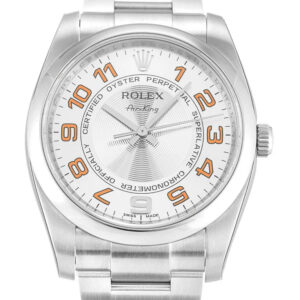
Rolex Air-King Watch 34mm Silver Dial 114200
Price range: $210.00 through $1,099.00 -
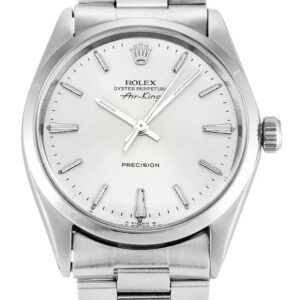
Rolex Air-King 5500 34mm Silver Dial
Price range: $210.00 through $1,099.00 -
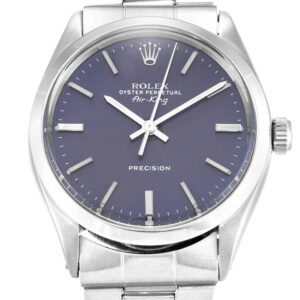
Rolex Air-King Blue Dial 34mm 5500
Price range: $210.00 through $1,099.00 -
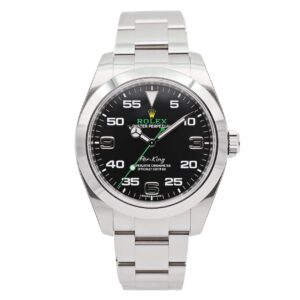
Rolex Air King Watches
Price range: $210.00 through $1,099.00 -
Rolex Air-King Blue Dial 34mm 114200
Price range: $210.00 through $1,099.00 -
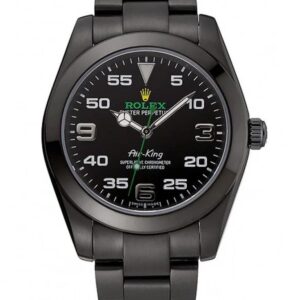
Rolex Air-King Black Dial 38mm 1454019
Price range: $210.00 through $1,099.00