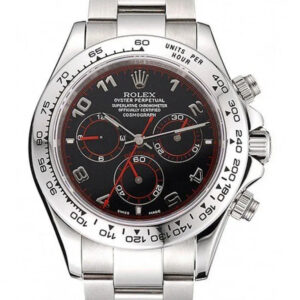
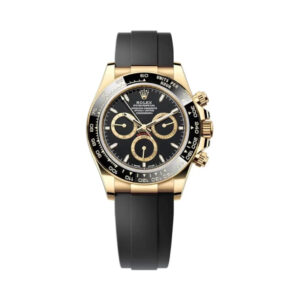
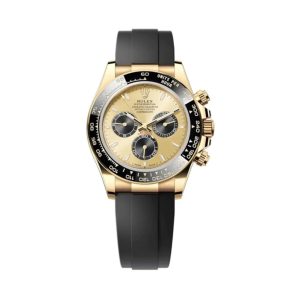
Rolex Cosmograph Daytona
Rolex Cosmograph Daytona Price Guide 2026: Navigating Retail, Secondary Markets, and Investment Value
The Rolex Cosmograph Daytona stands as the undisputed icon of luxury sports watches—a timepiece that transcends its function as a chronograph to become a global symbol of status, craftsmanship, and desirability. In 2026, the Daytona’s pricing landscape is more complex than ever, shaped by record-high precious metal costs, global inflation, new import tariffs, and a stark divide between Rolex’s official retail prices (MSRP) and the reality of the secondary market. For collectors, first-time buyers, and investors alike, understanding this dual-market dynamic is essential to making informed decisions. This comprehensive guide breaks down the 2026 pricing for every Daytona model, explains the forces driving price disparities, and outlines actionable strategies for buying—or investing in—one of the world’s most coveted watches.
2026 Official Retail Prices (MSRP): A 6-7% Hike Across the Board
January 2026 marked a significant price adjustment for the Rolex Cosmograph Daytona lineup, with an average increase of 6-7% across all models. This hike was driven by three core factors: historic highs in the spot prices of gold and platinum, sustained global inflationary pressures, and new tariffs on Swiss luxury goods imports in key markets including the United States. Unlike 2025’s targeted increases— which focused heavily on precious metal models—2026’s adjustments applied to all Daytonas, from the entry-level stainless steel variants to the ultra-exclusive platinum Ice Blue reference. For authorized dealers (ADs), these prices represent the “list price”—but for most buyers, this number remains theoretical, as the most sought-after models are nearly impossible to purchase at MSRP without years of AD relationship-building or extraordinary luck.
Below is the complete 2026 MSRP for all core Rolex Cosmograph Daytona models, in both US Dollars (USD) and Chinese Yuan (CNY), reflecting the January price increases:
| Model Reference | Material | Dial/Bezel Configuration | 2026 Retail Price (USD) | 2026 Retail Price (CNY) |
|---|---|---|---|---|
| 126500LN | Oystersteel | White Dial / Black Bezel (“Panda”) | $16,900 | ~¥122,000 |
| 126500LN | Oystersteel | Black Dial / Black Bezel | $16,900 | ~¥122,000 |
| 126518LN | 18k Yellow Gold | Various Dials / Black Bezel | $43,850 | ~¥316,000 |
| 126515LN | 18k Everose Gold | Various Dials / Black Bezel | $46,800 | ~¥337,000 |
| 126519LN | 18k White Gold | Various Dials / Black Bezel | $45,200 | ~¥326,000 |
| 126508 | 18k Yellow Gold | Various Dials / Gold Bezel | $48,400 | ~¥349,000 |
| 126505 | 18k Everose Gold | Various Dials / Rose Gold Bezel | $51,350 | ~¥370,000 |
| 126506 | Platinum | Ice Blue Dial / Chestnut Bezel | $79,900 | ~¥576,000 |
| 126589RBR | 18k White Gold | Diamond Bezels / Various Dials | $95,000+ | ~¥685,000+ |
Note: Gem-set Daytona models (featuring diamonds, sapphires, or custom stone configurations) have highly variable pricing, with top-tier variants exceeding $150,000 USD in 2026. Prices for these models are determined by stone quality, carat weight, and custom craftsmanship.
The Secondary Market Reality: Where Daytonas Actually Trade in 2026
For 99% of buyers, the secondary market—comprising gray market dealers, auction houses, private sales, and platforms like Bob’s Watches and WatchBox—is where Daytona transactions occur. In 2026, the secondary market remains a tale of two extremes: stainless steel models command massive premiums over retail, while most gold variants trade at or below MSRP. This disparity is driven by consumer demand, speculative behavior, and shifting collector preferences. Below is a detailed breakdown of 2026 secondary market prices for all core Daytona models, including premium/discount percentages, availability, and market analysis.
Stainless Steel Models (126500LN): The “Hype” Kings of 2026
The Oystersteel 126500LN Daytona—including the iconic “Panda” (white dial/black bezel) and black dial/black bezel variants—remains the most sought-after luxury watch in the world in 2026. Despite a market cooling since the 2023 peak (when premiums exceeded 100%), these steel Daytonas still command a staggering 60-75% premium over the $16,900 MSRP in the unworn secondary market.
- Unworn Secondary Price (2026): $26,500 – $29,500 USD
- Average Premium: +60% to +75% over retail
- Panda vs. Black Dial: The Panda configuration consistently fetches the top end of the price range ($28,000 – $29,500) due to its iconic visual contrast and cultural cachet, while the black dial variant trades at $26,500 – $28,000.
- Availability: Extremely low. Even gray market dealers report limited stock, with most unworn units selling within days of listing.
The steel Daytona’s enduring popularity stems from its status as the “entry point” to the Daytona lineup—at $16,900 MSRP, it is the most affordable Daytona by material, making it accessible to a massive pool of collectors and enthusiasts. However, Rolex produces far fewer steel Daytonas than other sports models (e.g., Submariners, Datejusts), creating a bottleneck where millions of buyers chase thousands of units. For ADs, steel Daytonas are allocated only to their most loyal customers—those with years of purchase history or who have bought other high-margin Rolex products (e.g., jewelry, precious metal watches). For everyone else, the secondary market is the only option.
Gold Oysterflex Models (126518LN, 126515LN, 126519LN): The 2026 “Smart Buy”
The biggest anomaly in the 2026 Daytona lineup is the gold Oysterflex models—18k yellow gold (126518LN), Everose gold (126515LN), and white gold (126519LN). These models, which feature Rolex’s sporty Oysterflex rubber strap (instead of a traditional metal bracelet), trade at or slightly below MSRP in the unworn secondary market, with a -5% to +2% premium/discount range.
- Unworn Secondary Price (2026): $41,000 – $46,000 USD
- Retail Price: $43,850 – $46,800 USD
- Availability: High. Unlike steel Daytonas, these models are often in stock at ADs, with no waiting list required for most buyers.
Why the discount? The gold Oysterflex Daytonas have a high MSRP ($43k+), which deters speculative “flipping”—a practice that drove up steel model prices in 2022-2023. Additionally, many collectors still associate the Daytona with a metal bracelet, making the Oysterflex strap a less desirable feature for traditionalists. For end-users (buyers who plan to wear the watch, not resell it), these models represent the best value in the 2026 Daytona lineup: they offer the same iconic Daytona design and Swiss craftsmanship as the steel variants, with the luxury of solid gold, at or below retail price. In some cases, buyers can find unworn examples on the secondary market for $2,000 – $3,000 less than AD pricing.
Full Gold Link Models (126508, 126505): Classic Style, Discounted Pricing
The full gold link Daytona models—18k yellow gold (126508) and Everose gold (126505)—feature traditional metal bracelets (instead of Oysterflex) and trade at a slight discount to MSRP in 2026. These models appeal to collectors who prefer the classic “presidential” look of a metal bracelet, but their popularity has waned in favor of the sportier Oysterflex variants.
- Unworn Secondary Price (2026): $45,000 – $50,000 USD
- Retail Price: $48,400 – $51,350 USD
- Discount: 3-8% below retail
- Availability: Moderate to high. Most ADs carry these models in stock, with minimal wait times.
Like the Oysterflex gold models, the full gold link Daytonas suffer from a high MSRP that discourages flipping. Additionally, the metal bracelet adds weight and formality, making these models less practical for everyday wear than the Oysterflex variants. For buyers who prioritize classic Rolex design and solid gold construction, however, these models offer excellent value in 2026—with the added benefit of immediate availability at ADs or discounted pricing on the secondary market.
Platinum “Ice Blue” (126506): The Daytona Grail
The platinum 126506 Daytona—known as the “Ice Blue” for its signature ice blue dial and chestnut ceramic bezel—is the pinnacle of the Rolex Cosmograph Daytona lineup. In 2026, this ultra-exclusive model commands a 20-35% premium over its $79,900 MSRP in the secondary market, with unworn units trading at $95,000 – $110,000 USD.
- Unworn Secondary Price (2026): $95,000 – $110,000 USD
- Average Premium: +20% to +35% over retail
- Special Configurations: Meteorite dials or custom stone settings can push prices to $120,000+.
- Availability: Low. Rolex produces very few platinum Daytonas, and AD allocations are limited to their most elite customers.
The Ice Blue Daytona’s premium is driven by its exclusivity: platinum is a rare, high-cost material (with spot prices at historic highs in 2026), and the ice blue dial is a Rolex signature reserved for platinum models. While its premium is lower than the steel Panda’s (20-35% vs. 60-75%), the Ice Blue’s high absolute price tag ($79,900 MSRP) limits the buyer pool, keeping availability low but stable. For ultra-high-net-worth collectors, the Ice Blue Daytona is a “grail” piece— a status symbol that combines Rolex’s craftsmanship with rare materials and exclusive design. In 2026, it remains one of the most stable luxury watch investments, with minimal price volatility compared to steel models.
Gem-Set Models (126589RBR+): Custom Pricing for Ultra-Luxury
Gem-set Daytona models—featuring diamond or sapphire bezels, dial markers, or case details—have no fixed secondary market price in 2026. These custom variants start at $95,000 USD (for the 126589RBR white gold diamond bezel model) and can exceed $150,000 for top-tier configurations with large, high-quality stones (e.g., VS1-VVS1 diamonds, rare sapphires). Pricing is determined by stone quality, carat weight, and custom craftsmanship, with auction houses often fetching the highest prices for one-of-a-kind gem-set Daytonas.
Why Is the Rolex Daytona So Expensive in 2026? The Four Core Drivers
The Daytona’s extreme pricing—especially the steel model’s massive secondary market premium—cannot be explained by material costs alone. In 2026, four interrelated factors combine to make the Daytona the most expensive luxury sports watch on the market: production bottlenecks, the “entry-level paradox,” soaring material costs, and unrivaled cultural status.
1. Production Bottlenecks: The Caliber 4131 Movement
Rolex produces far fewer Daytonas than other iconic models like the Submariner or Datejust— a deliberate choice driven by the complexity of the Daytona’s Caliber 4131 movement. Introduced in 2023, the Caliber 4131 is a high-precision automatic chronograph movement with 47 jewels, a 72-hour power reserve, and Rolex’s patented Chronergy擒纵系统 (escapement system), which is resistant to magnetic fields and offers superior accuracy. Assembling and regulating the Caliber 4131 takes significantly longer than standard Rolex movements—each unit requires hours of manual work by master watchmakers, limiting production volume. Unlike mass-produced watches, the Daytona is a “craftsman’s piece,” and Rolex prioritizes quality over quantity, creating a permanent supply shortage for the most sought-after variants.
2. The “Entry-Level” Paradox: Steel = Most Desirable
The steel 126500LN Daytona is the “cheapest” Daytona by material ($16,900 MSRP), yet it is the most expensive to acquire in the secondary market— a paradox that defines the 2026 market. This dynamic is driven by supply and demand: the steel Daytona is the only variant accessible to the mass market (collectors, enthusiasts, and first-time luxury watch buyers), but Rolex produces only a small fraction of the steel models needed to meet demand. Millions of buyers compete for thousands of units, creating a bidding war in the secondary market and driving premiums to 60-75%. For Rolex, this paradox is intentional: the steel Daytona’s scarcity maintains the brand’s exclusivity, while its relatively low MSRP keeps it aspirational for a global audience.
3. Material Costs: Historic Gold and Platinum Prices
2026’s 6-7% MSRP hike was largely driven by historic highs in the spot prices of gold and platinum, combined with new import tariffs on Swiss luxury goods in the US and other key markets. Gold prices rose by over 15% in 2025, reaching an all-time high in early 2026, while platinum prices jumped by 20% due to supply chain disruptions and increased industrial demand. For precious metal Daytona models (gold, platinum), these material costs directly impact MSRP—Rolex passes on a portion of the cost increase to buyers to maintain profit margins. For steel models, the price hike is a strategic move: Rolex uses material cost increases as an opportunity to align steel Daytona pricing with its luxury brand positioning, further increasing its aspirational value.
4. Cultural Status: More Than a Watch—A Global Icon
The Rolex Cosmograph Daytona is not just a timepiece; it is a cultural icon, validated by celebrities, race car drivers, and record-breaking auction sales. From Paul Newman—whose vintage “Big Red” Daytona sold for $5.475 million at a 2020 Phillips auction—to modern A-listers like LeBron James and Ryan Gosling, the Daytona has long been a symbol of success and style. This cultural cachet insulates the Daytona from economic downturns better than almost any other luxury good: even in times of global recession, demand for the Daytona remains strong, as buyers view it as a “safe haven” asset rather than a simple consumer product. In 2026, this cultural status is more powerful than ever— the Daytona is no longer just a watch for collectors; it is a global status symbol, and buyers are willing to pay a premium for that symbolism.
2026 Investment Outlook: Is the Daytona Still Worth the Premium?
The “flip for profit” era of 2022-2023—when steel Daytona buyers could resell their watches for double the MSRP within weeks—has ended. In 2026, the Daytona market is more rational, with minimal short-term gains for most models. However, the Daytona remains a strong long-term investment for select variants, while others are better viewed as consumption purchases (buy for wear, not resale). Below is a realistic 2026 investment outlook for all core Daytona models:
Steel Daytona (126500LN): Strong Hold, Liquid Asset
The steel 126500LN Daytona remains a strong investment in 2026, despite a cooling market. While massive short-term gains (100%+ premiums) are unlikely, the steel Daytona is a liquid asset—it can be sold quickly on the secondary market for a consistent 60-75% premium over MSRP. For long-term investors (5+ years), the steel Daytona is expected to retain its premium, with gradual price increases aligned with inflation and Rolex’s annual MSRP hikes. The Panda configuration is the most desirable for investment, as its iconic design ensures enduring demand from collectors.
Key Caveat: Avoid buying steel Daytonas at the top end of the secondary market ($29,000+). Prices in this range are vulnerable to minor market corrections, and buyers may struggle to resell for a profit in the short term. The sweet spot for investment is $26,500 – $28,000 for unworn units.
Gold Models (Oysterflex & Full Link): Consumption, Not Investment
All gold Daytona models (Oysterflex and full link) are consumption purchases in 2026—buyers should expect to lose money if they resell within 1-2 years. These models trade at or below MSRP in the secondary market, and there is no significant premium to drive short-term gains. However, over a 10+ year horizon, solid gold Daytonas are a reliable wealth preservation asset: they track with global gold prices and inflation, ensuring that the watch’s value holds steady over time. For buyers who want a Daytona to wear and pass down as a heirloom, gold models are an excellent choice—they offer luxury, craftsmanship, and long-term value, even if they do not generate short-term profit.
Platinum Ice Blue (126506): Stable Long-Term Value
The platinum Ice Blue Daytona is a stable long-term investment in 2026, with a 20-35% secondary market premium that is unlikely to decline significantly. Platinum prices are expected to remain high for the foreseeable future, and the Ice Blue’s exclusivity (limited production, AD allocations for elite customers) ensures enduring demand from ultra-high-net-worth collectors. While short-term gains are minimal, the Ice Blue Daytona is a “blue chip” luxury watch investment—its value holds steady in all economic conditions, and it is highly liquid for buyers in the ultra-luxury market. Special configurations (e.g., meteorite dials) offer even greater long-term potential, as these limited-edition variants appreciate in value as they become rarer.
Discontinued/Vintage Models: Expert-Only Investments
Discontinued and vintage Daytona models—such as the 2023 “Le Mans” limited edition or classic Paul Newman references—continue to appreciate in value in 2026, with auction prices reaching record highs for rare variants. However, investing in vintage Daytonas requires deep expertise and significant capital: buyers must be able to authenticate rare models, assess condition, and understand market demand for specific references. For novice investors, vintage Daytonas are a high-risk proposition—fakes are common, and mispricing can lead to significant losses. For expert collectors, however, vintage Daytonas are the most lucrative investment in the lineup, with some rare variants appreciating by 10-20% annually.
2026 Buying Strategy: How to Acquire a Daytona (Without Overpaying)
Buying a Rolex Cosmograph Daytona in 2026 requires a clear strategy—whether you are targeting the steel Panda, a gold Oysterflex model, or the platinum Ice Blue. The key is to align your buying approach with the model’s availability and market dynamics: for steel models, patience or a willingness to pay the secondary market premium is required; for gold models, immediate availability at ADs or discounted secondary market pricing is possible; for the platinum Ice Blue, building an AD relationship is the only way to avoid exorbitant secondary market premiums. Below is a step-by-step buying strategy for each core Daytona model in 2026:
For the Steel Daytona (126500LN): Two Options
The steel Daytona is the hardest model to acquire in 2026, with no easy path to MSRP pricing. Buyers have two realistic options:
Option A: Build an AD Relationship (Long-Term, Low Cost)
- Choose a local authorized dealer and establish a long-term relationship: make regular purchases (e.g., Rolex jewelry, non-hyped watch models like the Datejust or Air-King), attend AD events, and stay in contact with sales staff.
- Be prepared to wait 3-5 years for an allocation: ADs prioritize loyal customers for steel Daytona allocations, and short-term buyers are unlikely to receive a spot on the waiting list.
- Avoid “配货” (mandatory additional purchases) from unethical ADs: some dealers require buyers to purchase high-margin products (e.g., precious metal watches) to receive a steel Daytona allocation—this is not standard practice, and buyers should walk away from these demands.
Option B: Buy from a Reputable Gray Dealer (Short-Term, Premium Cost)
- Choose a well-known, trusted gray market dealer (e.g., Bob’s Watches, WatchBox, Authentic Watches) with a proven track record of authenticity and customer service.
- Expect to pay $27,000 – $28,500 for an unworn Panda or black dial model: this is the “sweet spot” for 2026, avoiding the top-end premium ($29,000+) that is vulnerable to market corrections.
- Verify authenticity rigorously: ask for the watch’s serial number, warranty card (dated 2026), and a third-party authentication report (e.g., from WatchBox or Rolex Service Center).
For Gold Models (Oysterflex & Full Link): Skip the Wait, Save Money
Gold Daytona models are the easiest to acquire in 2026, with immediate availability at ADs and discounted pricing on the secondary market. Buyers should follow this strategy:
- Visit multiple ADs: most authorized dealers carry gold Oysterflex and full link models in stock, with no waiting list required. Call ahead to confirm availability to save time.
- Negotiate for small perks: while ADs do not discount MSRP, many will offer free services (e.g., watch sizing, annual maintenance) or accessories (e.g., Rolex watch boxes, cleaning kits) to sweeten the deal.
- Check the secondary market for discounts: unworn gold models can be found for $2,000 – $3,000 less than MSRP on trusted platforms like Bob’s Watches. Ensure the watch has a valid warranty and is in unworn condition.
For the Platinum Ice Blue (126506): Elite AD Relationship Only
The platinum Ice Blue Daytona is only available to elite AD customers in 2026—secondary market prices ($95,000+) are exorbitant, and buyers should avoid overpaying if possible. The only realistic strategy is:
- Build a relationship with a high-end AD: focus on purchasing other platinum or high-value gold Rolex models (e.g., Day-Date, Sky-Dweller) to establish yourself as a top-tier customer.
- Be patient: AD allocations for the Ice Blue Daytona are extremely limited, with wait times of 1-2 years even for elite customers.
- Avoid private sales: fake platinum Daytonas are rare but exist, and private sellers may not offer a valid warranty or authentication. Stick to ADs or trusted auction houses (e.g., Phillips, Christie’s) for genuine units.
Universal Rule: Avoid Scams at All Costs
The Daytona’s popularity makes it a prime target for counterfeiters and scammers in 2026. Buyers must follow these rules to avoid losing money:
- If a private seller offers an unworn steel Daytona for less than $20,000 USD, it is 100% a fake. The steel Daytona’s secondary market floor is $26,500, and any price below this is a scam.
- Use an escrow service for private transactions over $10,000: platforms like Escrow.com hold funds until the watch is authenticated, protecting buyers from fraudulent sellers.
- Always request a third-party authentication report: for secondary market purchases, a report from a Rolex Service Center or trusted firm (e.g., WatchBox) is non-negotiable.
- Avoid “gray market” dealers with no online presence or customer reviews: stick to well-known platforms with a proven track record of authenticity.
2026 Daytona Price Summary: What You Will Actually Pay
To simplify the 2026 Daytona market, below is a summary table of the real-world cost for each core model (average secondary market price for unworn units), availability, and a final verdict for buyers:
| Model | 2026 Retail Price (USD) | 2026 Real-World Cost (Unworn Secondary, USD) | Availability | Buyer Verdict |
|---|---|---|---|---|
| Steel Panda (126500LN) | $16,900 | $28,500 (avg) | Extremely Low | Pay the premium or wait 3-5 years for an AD allocation. |
| Steel Black Dial (126500LN) | $16,900 | $27,000 (avg) | Very Low | Slightly cheaper than the Panda; same availability challenges. |
| Gold Oysterflex (126518LN/15LN/19LN) | $43,850 – $46,800 | $42,000 – $46,000 | High | Best value for immediate ownership; buy at AD or secondary for a discount. |
| Full Gold Link (126508/05) | $48,400 – $51,350 | $45,000 – $50,000 | Moderate-High | Classic style at a discount; ideal for traditionalists. |
| Platinum Ice Blue (126506) | $79,900 | $100,000+ (avg) | Low | Ultimate status symbol; build an AD relationship to avoid secondary premiums. |
Final Thoughts: The Daytona’s Enduring Legacy in 2026
In 2026, the Rolex Cosmograph Daytona remains more than a watch—it is a global phenomenon, a symbol of luxury, craftsmanship, and desirability that transcends market trends. While the steel model’s massive secondary market premium may seem irrational to outsiders, it is a testament to the Daytona’s unique place in luxury culture: it is the only watch that appeals to both mass-market collectors and ultra-high-net-worth buyers, creating a supply-demand dynamic that no other luxury good can match.
For 2026 buyers, the key is to set realistic expectations: the steel Daytona is not a “cheap” luxury watch, and the gold/platinum models are not investments for short-term profit. Instead, the Daytona is a long-term purchase—a timepiece that will be worn, cherished, and passed down for generations. Whether you pay the premium for a steel Panda, buy a gold Oysterflex model at retail, or invest in a platinum Ice Blue, the Daytona is more than a financial asset: it is a piece of history, a symbol of success, and one of the few luxury goods that truly stands the test of time.
Disclaimer: All prices listed in this guide are averages as of Q1 2026. Secondary market prices fluctuate daily based on global economic conditions, currency exchange rates, and collector demand. Always conduct thorough due diligence and verify authenticity before purchasing a Rolex Cosmograph Daytona.
Showing all 3 resultsSorted by popularity
-
Rolex Daytona 39mm Black Dial 80296
Price range: $259.00 through $1,329.00 -
Rolex Daytona 40 mm Black Dial 126518LN
Price range: $239.00 through $1,329.00 -
Rolex Super Clone Daytona 40 mm Golden Dial 126518LN Pikachu
Price range: $239.00 through $1,329.00