
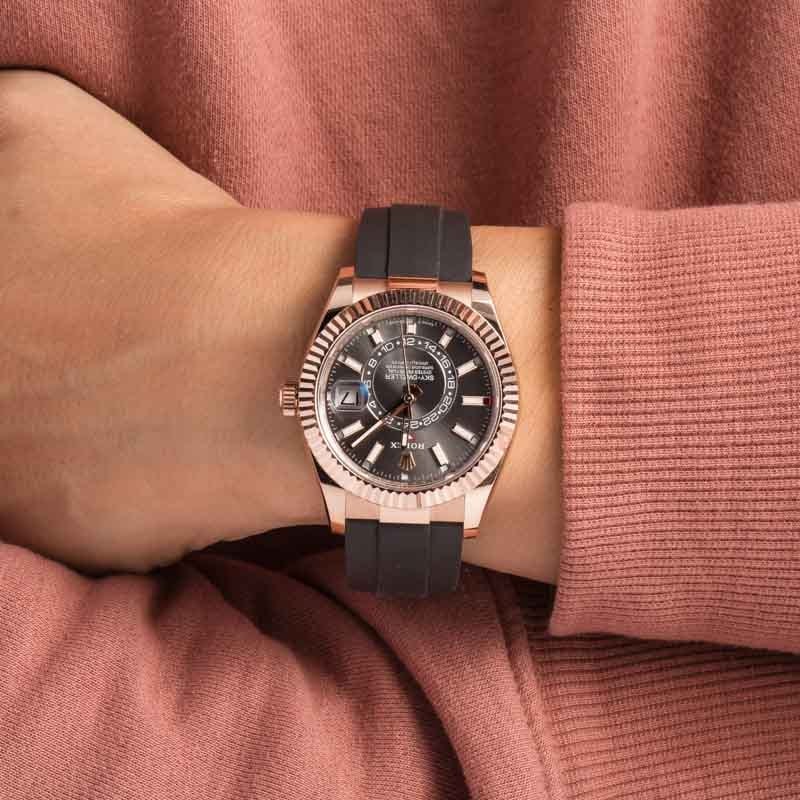
Owning a Rolex is a milestone for any horology enthusiast, a symbol of timeless craftsmanship, luxury, and enduring value. For many, the pre-owned market is the gateway to this iconic brand—offering the chance to skip years-long waitlists for coveted models like the Daytona Panda or Submariner Hulk, secure vintage pieces with unique character, and access luxury at a more accessible price point than buying new. In 2026, the pre-owned Rolex market is thriving, with genuine models retaining their value fiercely and high-net-worth collectors and first-time buyers alike flocking to secondary platforms. But this booming market is not without its pitfalls: sophisticated super clones, poorly maintained timepieces, untrustworthy sellers, and overlooked details can turn a dream purchase into a costly mistake. With genuine Rolex prices soaring to $9,000–$75,000 for new models and super clones advancing to near-perfect replication, avoiding critical errors is more important than ever.
This comprehensive guide breaks down the top 10 mistakes to avoid when buying a pre-owned Rolex, drawing on industry expertise, 2026 market insights, and the telltale signs of counterfeits and neglected timepieces. Whether you’re a seasoned collector adding to your portfolio or a first-time buyer investing in your first luxury watch, these lessons will equip you to navigate the pre-owned market with confidence, ensuring you secure a genuine, well-cared-for Rolex that stands the test of time—both in performance and value. We’ll cover everything from seller verification and authenticity checks to condition assessments and post-purchase care, leaving no stone unturned in your quest for the perfect pre-owned Rolex.
Mistake 1: Skipping Rigorous Seller Verification and Choosing Unvetted Platforms
The single most consequential mistake a pre-owned Rolex buyer can make is purchasing from an untrustworthy, unverified seller. In 2026, the digital marketplace is flooded with fly-by-night vendors, social media scammers, and non-specialized retailers looking to capitalize on the demand for Rolex timepieces—many of whom peddle counterfeits, misrepresented watches, or stolen goods. Legitimate pre-owned Rolex sellers build their reputation on transparency, expertise, and a track record of satisfied customers; unvetted sellers hide behind vague profiles, “too-good-to-be-true” prices, and a lack of accountability.
Authorized pre-owned Rolex dealers and reputable secondary marketplaces invest in certification, horological expertise, and buyer protection programs—things that scammers and unqualified sellers simply do not offer. A common red flag is a seller who refuses to share their physical business address, contact information, or professional credentials, or who pressures you into making a quick purchase with “limited stock” or “one-time discounts.” Many first-time buyers fall for these tactics, only to receive a counterfeit super clone or a watch in far worse condition than advertised.
How to avoid this mistake:
Stick to authorized pre-owned (APO) Rolex dealers first—these retailers are vetted by Rolex itself, guarantee 100% genuine timepieces, and offer factory-backed warranties for pre-owned models. For the secondary market, choose established platforms with robust buyer protection, such as Chrono24, Watchfinder & Co., or Bob’s Watches, all of which verify sellers, offer escrow services, and require detailed listings with high-resolution photos and documentation. For local purchases, seek out jewelers with AWCI (American Watchmakers-Clockmakers Institute) certified watchmakers on staff—these professionals have the training to authenticate and service Rolex watches. Always check independent reviews: scour Reddit’s r/Rolex, watch forums like Watchuseek, and Google Reviews for consistent, positive feedback from past buyers. A genuine seller will have a long history of happy customers and will never hesitate to answer your questions or provide additional information about the watch. Never buy from sellers on social media, unregulated marketplaces, or those who offer “customs-seized” or “factory second” Rolexes—these are almost always code for counterfeits.
Mistake 2: Ignoring Full Documentation and Skipping Provenance Checks
A genuine pre-owned Rolex is only as valuable and verifiable as its documentation. Yet countless buyers make the mistake of purchasing a “no papers” Rolex without verifying its provenance, a decision that puts them at risk of buying a counterfeit, stolen, or tampered watch—and drastically reduces the timepiece’s resale value. A complete set of Rolex paperwork is not just a formality; it is the watch’s official identity, proving its authenticity, production date, and ownership history. For pre-owned Rolexes, documentation is non-negotiable, and any seller who cannot provide it should be avoided.
A full set of Rolex papers includes the original warranty card (matching the watch’s serial and reference numbers), the instruction manual, the original box (with the correct model and era-specific branding), and any service records from authorized Rolex Service Centers. The warranty card is the most critical document: it features the watch’s unique serial number, reference number, purchase date, and a valid dealer stamp, all of which must align with the watch itself. For post-2008 Rolex models, the serial number is laser-etched on the rehaut (inner bezel ring) at 6 o’clock; for pre-2005 models, it is engraved between the lugs at 6 o’clock. A mismatched serial number on the warranty card and the watch is an immediate red flag for a counterfeit or stolen timepiece.
Even for vintage Rolexes, which may not have complete modern documentation, a reputable seller will provide a professional authentication report and any available historical records to prove provenance. Buying a “no papers” Rolex means you have no way to verify the watch’s authenticity without a costly professional inspection, and it will be nearly impossible to resell the watch for its full market value—collectors and serious buyers always demand documentation.
How to avoid this mistake:
Always request full documentation before making an offer on a pre-owned Rolex. Cross-check the serial number and reference number on the warranty card with the numbers on the watch itself—use a 10x loupe to inspect the engraving for crispness and accuracy (counterfeits often have blurry, shallow, or misaligned numbers). Verify the dealer stamp on the warranty card with Rolex’s official retailer list to ensure it is a legitimate authorized dealer. For pre-owned watches with service history, confirm that the service was performed at an authorized Rolex Service Center—genuine service records include detailed notes, part replacements, and a Rolex stamp. If a watch has no original papers, insist on a certified authentication report from a Rolex Service Center or an independent certified horologist (such as a GIA or AWCI professional). This report will act as your new proof of authenticity and protect your investment. Never purchase a pre-owned Rolex from a seller who claims “papers are lost” and refuses to provide a professional authentication report—this is a classic sign of a problematic watch.
Mistake 3: Failing to Master Authenticity Checks and Falling for Super Clones
In 2026, Rolex super clones have reached unprecedented levels of sophistication—so much so that even casual watch enthusiasts can struggle to tell them apart from genuine timepieces. These high-quality counterfeits feature 904L steel cases, cloned Swiss movements like the VR3135 and VR3235, ceramic bezels with exact font engraving, and 2.5x Cyclops magnification, all machined to 0.02mm tolerances. At wrist distance, they are nearly indistinguishable from genuine Rolexes, and only a detailed inspection with magnification and horological expertise can reveal their flaws. The biggest mistake buyers make is skipping a thorough authenticity check, relying solely on visual inspection or the seller’s word—and paying thousands for a counterfeit that is worth a fraction of the genuine model.
Super clones mimic the look and feel of genuine Rolexes, but they lack the brand’s proprietary engineering, quality control, and genuine materials. Even the best super clones have telltale signs: shallow rehaut engravings, a micro-engraved coronet on the sapphire crystal that is too large or misaligned, a seconds hand that does not sweep perfectly smoothly, or lume that fades unevenly under UV light. Genuine Rolexes are built to Swiss Superlative Chronometer standards, with accuracy of -2/+2 seconds per day; super clones, even with cloned movements, have accuracy of ±5 seconds per day or more, and their internal components are cheap and poorly made.
Many buyers assume that a “hefty” watch or a “smooth sweep” means it is genuine, but super clones now match the weight and movement feel of genuine Rolexes—these are no longer reliable telltale signs. Only a detailed check of the micro-authenticity markers (the small, precise details that Rolex has engineered to deter counterfeiters) can confirm a watch’s genuine status.
How to avoid this mistake:
Master the key authenticity markers of a genuine Rolex and inspect every watch with a 10x loupe (a non-negotiable tool for pre-owned Rolex buyers). Here are the non-negotiable checks to perform:
Rehaut Engravings: Post-2005 Rolex models have a repeating “ROLEX” engraving around the inner bezel ring, laser-etched with razor-sharp precision and perfect spacing. Super clones have thicker, wobbly, or misaligned engravings.
Crystal Micro-Coronet: From 2002 onward, all genuine Rolex sapphire crystals have a tiny coronet logo etched at 6 o’clock, only visible with a loupe (0.1mm tall). Super clones either omit this, make it too large, or blur the edges.
Cyclops Magnification: The Cyclops lens over the date window magnifies the date exactly 2.5x, with no distortion, bubbles, or color tint. Super clones often have 2x magnification or misaligned lenses.
Serial/Reference Number Engraving: Genuine engravings are deep, crisp, and consistent; super clones have shallow, blurry, or uneven numbers.
Lume: Post-2008 genuine Rolexes use Chromalight lume that glows a deep blue and fades evenly; super clones have lume that glows green (even on modern models) or fades patchily.
Movement Sweep: A genuine Rolex automatic movement has a perfectly smooth sweeping seconds hand with no “tick”; even the best cloned movements have a slight stutter visible under close inspection.
For peace of mind, pay for a professional authentication from an authorized Rolex Service Center or a certified horologist. This small investment (typically $150–$300) saves you from losing thousands on a counterfeit, and the authentication report will serve as proof of genuine status for future resale. Never buy a pre-owned Rolex without performing these micro-authenticity checks—even if the watch has papers, counterfeiters now forge documentation to match their super clones.
Mistake 4: Overlooking the Watch’s Condition and Ignoring Maintenance History
Authenticity is non-negotiable, but a genuine Rolex in poor condition is still a bad investment. Countless buyers make the mistake of focusing solely on getting a “good deal” on a genuine Rolex and overlooking the watch’s physical condition and maintenance history—only to discover costly repairs, worn components, or permanent damage after purchase. A Rolex is a precision mechanical instrument, and neglecting maintenance leads to gasket failure (losing water resistance), oil drying, accuracy drift, and even permanent movement damage. In 2026, a full Rolex service costs $800–$2,800+ depending on the model, and repairing a neglected movement can cost thousands more—easily erasing any savings from a “cheap” pre-owned purchase.
Even a visually clean Rolex can have hidden issues: a crown that does not screw down tightly, a bezel that rotates loosely, a movement that has not been serviced in a decade, or gaskets that are cracked and worn. These issues are not just cosmetic; they compromise the watch’s performance, water resistance, and lifespan. A common mistake is assuming that a “cosmetically perfect” watch is in mechanical perfect condition—this is rarely the case, especially for vintage or pre-owned Rolexes that have been worn daily.
Maintenance history is just as important as physical condition. A Rolex that has been regularly serviced at an authorized Service Center with genuine parts will last for generations; a watch that has never been serviced, or has been serviced with non-genuine parts by an unqualified watchmaker, will suffer from premature wear and mechanical failure. Many sellers omit maintenance history to make a watch seem more valuable, but a lack of service records is a major red flag.
How to avoid this mistake:
Inspect the watch thoroughly, both cosmetically and mechanically, before purchase—and always ask for the complete maintenance history. Here’s a step-by-step condition check to perform:
Cosmetic Inspection: Check the case, crystal, and bracelet for scratches, dents, or polish marks (over-polishing thins the case and reduces value). Ensure the bezel is scratch-free and the engravings are crisp. For metal bracelets, check for loose links, worn clasps, or bent end-links.
Mechanical Inspection: Test the crown for a tight screw-down fit (Rolex’s Triplock/Twinlock crowns should click firmly when screwed down). Rotate the bezel (for Submariner, GMT-Master II, and Yacht-Master models) to ensure it clicks 120 times precisely with no play or grinding. Wind the watch and check the seconds hand for a smooth sweep; set the date and time to confirm all functions work correctly.
Water Resistance Check: Insist on a professional water resistance test (per ISO-22810 standards) from a certified horologist. Even if you don’t plan to swim with the watch, a functional water resistance seal is a sign of a well-maintained Rolex.
Maintenance History Verification: Confirm that all services were performed at an authorized Rolex Service Center—genuine service records include a Rolex stamp, detailed part replacements, and a service date. If the watch has no service history, factor the cost of a full Rolex service into your purchase price, and insist the seller either services the watch before sale or reduces the price to cover the cost.
For vintage Rolexes, work with a specialist dealer who can assess the watch’s condition and provide a detailed report on any restorations or repairs. Vintage Rolexes are often valued for their “patina” (natural wear), but excessive damage or poor restorations will reduce their value significantly. Never purchase a pre-owned Rolex that has visible mechanical issues (e.g., a stiff crown, a loose bezel, or an inaccurate movement) or no maintenance history—this is a recipe for costly repairs down the line.
Mistake 5: Accepting Non-Genuine Aftermarket Parts and Tampered Components
One of the most common and costly pitfalls in the pre-owned Rolex market is a watch with non-genuine aftermarket parts. Unscrupulous sellers often replace genuine Rolex components—such as the sapphire crystal, bezel insert, bracelet links, crown, or even movement parts—with cheap aftermarket alternatives to cut costs, hide damage, or make a worn watch look newer. Non-genuine parts not only compromise the watch’s performance, durability, and water resistance but also destroy its value: a Rolex with even one non-genuine part is worth a fraction of a fully original timepiece, and collectors will avoid it entirely.
In 2026, aftermarket parts for Rolex are widely available, and many are designed to look nearly identical to genuine parts—so much so that even casual buyers can struggle to tell them apart. Common non-genuine parts include sapphire crystals without the micro-engraved coronet, ceramic bezel inserts with faded colors or blurry engravings, bracelet links that are hollow (instead of solid), and crowns without the genuine Rolex coronet or screw-down seal. These parts are cheap to manufacture and easy to install, but they lack Rolex’s proprietary engineering and quality control: an aftermarket crystal will scratch more easily, an aftermarket bezel insert will fade, and aftermarket movement parts will fail prematurely.
Some sellers also tamper with Rolex movements by installing non-genuine gears or jewels, a practice that ruins the watch’s mechanical integrity and makes it nearly impossible to service with genuine parts. Tampered movements are a death sentence for a pre-owned Rolex, as they will never perform to Rolex’s standards and will require a full replacement—costing thousands of dollars.
How to avoid this mistake:
Inspect every component of the watch for genuine Rolex branding and craftsmanship, and insist the seller confirm that all parts are 100% original. Here’s how to spot non-genuine parts:
Crystal: Genuine Rolex sapphire crystals have the micro-engraved coronet at 6 o’clock and an anti-reflective coating that is seamless and glare-free. Aftermarket crystals lack the coronet or have a cheap, uneven anti-reflective coating.
Bezel Insert: Genuine ceramic bezel inserts have crisp, even engravings and color that is consistent with Rolex’s official hues (e.g., the Submariner Hulk’s green is a deep sunburst green, not a neon green). Aftermarket inserts have blurry engravings, faded colors, or misaligned numerals.
Bracelet: Genuine Rolex bracelets have solid links (hollow links are a sign of aftermarket parts), precise engravings on the clasp, and end-links that hug the case with no gaps. Aftermarket bracelets have loose links, rough engravings, and ill-fitting end-links.
Crown: Genuine Rolex crowns feature the coronet logo, a smooth screw-down fit, and a rubber seal for water resistance. Aftermarket crowns have a blurry coronet, loose threading, or no seal.
Movement: While you should never open the caseback yourself (this voids the warranty and risks damage), a certified horologist can inspect the movement to confirm all parts are genuine Rolex. Genuine Rolex movements have engraved calibers, red reverse wheels, and high-quality jewels—aftermarket parts are cheap and unmarked.
Always purchase pre-owned Rolexes from sellers who guarantee 100% genuine parts and provide a written warranty for this guarantee. Authorized pre-owned dealers and reputable secondary marketplaces will never sell a Rolex with non-genuine parts, and they will provide a detailed parts inspection report upon request. If a seller cannot confirm that all parts are original, walk away from the purchase—this is a sure sign of a tampered or low-quality watch.
Mistake 6: Disregarding Serial and Reference Number Cross-Checks
Every genuine Rolex has a unique serial number (its “DNA”) and a reference number (which identifies the exact model, case size, bezel type, and features). These numbers are the foundation of Rolex’s identity system, and they reveal critical information about the watch: production date, model, and configuration. Yet countless buyers make the mistake of not cross-checking these numbers, a simple step that can reveal a counterfeit, stolen, or misrepresented watch in minutes. A mismatched serial and reference number, a serial number that has been altered or removed, or a reference number that does not match the watch’s features is an immediate red flag—one that no amount of “good deal” pricing can justify.
Rolex has changed the location of serial and reference numbers over the years, and knowing where to find them is key: Pre-2005: Serial number engraved between the lugs at 6 o’clock; reference number engraved between the lugs at 12 o’clock (bracelet must be removed to check). 2005–2008: Serial and reference numbers engraved both between the lugs and on the rehaut (inner bezel ring) at 6 o’clock. Post-2008: Serial number laser-etched only on the rehaut at 6 o’clock; reference number still engraved between the lugs at 12 o’clock.
Genuine Rolex serial numbers are sequential and reveal the watch’s production date (e.g., serial numbers starting with “G” were produced in 2010, “M” in 2014, “Y” in 2020). A serial number that does not match the watch’s apparent age (e.g., a watch with a 2020 serial number that looks 30 years old) is a sign of a counterfeit or a stolen watch with a replaced serial number. Reference numbers identify the exact model (e.g., 116610LN for a Submariner Date 40mm, 116500LN for a Daytona Panda 40mm), and a reference number that does not match the watch’s features (e.g., a reference number for a no-date Submariner on a watch with a date window) is a clear sign of a misrepresented or counterfeit timepiece.
Stolen Rolexes often have their serial numbers altered or removed, a practice that is easy to spot with a loupe: altered numbers have rough edges, uneven engravings, or gaps in the metal, while removed numbers leave a smooth, blank spot where the engraving should be. Buying a stolen Rolex is not only a financial loss but also a legal risk—stolen property can be seized by law enforcement, and you will have no recourse to recover your money.
How to avoid this mistake:
Make serial and reference number cross-checks the first step in your pre-owned Rolex inspection. Use a 10x loupe to locate the numbers and inspect them for crispness, accuracy, and signs of alteration or removal. Cross-check the serial number with Rolex’s production charts to confirm the watch’s production date matches its apparent age—online tools like the Rolex Watch Register make this easy. Cross-check the reference number with Rolex’s official model list to ensure it matches the watch’s features (case size, bezel type, date window, etc.). Use the National Crime Information Center (NCIC) database or Rolex’s stolen watch registry to confirm the serial number is not listed as stolen. If the numbers are blurred, altered, removed, or mismatched, walk away from the purchase immediately—this is a non-negotiable red flag. For added security, ask the seller to provide a serial number verification certificate from an authorized Rolex Service Center—this document confirms the serial number is genuine and not stolen.
Mistake 7: Paying Too Much (or Falling for “Fake Discounts” on Coveted Models)
The pre-owned Rolex market has clear, well-documented price benchmarks for every model, yet buyers often make two opposite and equally costly mistakes: paying well above market value for a watch with no added value, or falling for “fake discounts” on coveted models that are actually counterfeits or poorly maintained timepieces. In 2026, genuine pre-owned Rolexes hold their value fiercely—coveted models like the Daytona Panda, Submariner Hulk, and GMT-Master II Pepsi have minimal price depreciation, and vintage models often appreciate in value over time. There are no “steals” in the pre-owned Rolex market, and any seller offering a price that is significantly below or above market value is hiding something.
Many first-time buyers overpay for pre-owned Rolexes because they lack market research or are willing to pay a premium for “instant access” to a model with a long waitlist for new purchases. While it’s true that coveted models command a premium in the pre-owned market, this premium is finite—paying 20%+ above market value for a watch with no additional documentation, service history, or unique features is a bad investment. Overpaying locks you into a purchase that will be difficult to resell for its full value, and it erases any savings from buying pre-owned instead of new.
On the flip side, countless buyers fall for “fake discounts” on coveted models: a seller offers a Daytona Panda for $5,000 (a fraction of its $20,000+ market value) with the claim of “wholesale pricing” or “customs liquidation.” These offers are almost always counterfeit super clones, and the buyer ends up with a watch that is worth a few hundred dollars at most. Scammers use fake discounts to target buyers who are looking for a bargain on a coveted model, and they rely on the buyer’s excitement to skip authenticity checks and documentation verifications.
How to avoid this mistake:
Do your market research before making any offer on a pre-owned Rolex—this is the single best way to avoid overpaying or falling for a fake discount. Use reputable platforms like Chrono24, Watchfinder & Co., and Bob’s Watches to compare prices for the exact model, year, and condition you’re looking for. Pay attention to condition-based pricing: a watch with full papers, a recent service, and minimal wear will command a higher price than a watch with no papers, no service history, and heavy wear. For coveted models with waitlists, confirm the fair market premium with multiple sources—never pay a premium that is more than 10–15% above the average pre-owned price. Avoid any seller offering a discount of 30%+ on a genuine pre-owned Rolex—this is a classic sign of a counterfeit or misrepresented watch. If a price seems too good to be true, it almost always is. For rare or vintage Rolexes, work with a specialist dealer who can provide a fair market valuation based on the watch’s condition, provenance, rarity, and market demand. A specialist dealer will never overcharge or offer fake discounts, and they will provide a detailed pricing breakdown to justify their asking price.
Mistake 8: Skipping a Physical Inspection (and Relying Solely on Photos/Videos)
In the digital age, many pre-owned Rolex buyers purchase timepieces online without a physical inspection, relying solely on the seller’s photos, videos, and descriptions. This is a huge mistake—photos and videos can hide damage, non-genuine parts, and counterfeit details that are obvious in person. A watch that looks perfect in high-resolution photos may have a scratched crystal, a loose bezel, a misaligned dial, or a movement that does not function correctly when inspected hands-on. Even the most honest seller can miss small details in photos, and scammers use professional photography to make counterfeits and worn watches look like new.
Physical inspection is critical for two reasons: first, it allows you to perform the micro-authenticity checks (rehaut engravings, crystal coronet, etc.) that are impossible to verify in photos or videos; second, it lets you feel the watch’s weight, balance, and mechanical function—sensory details that no digital media can replicate. A genuine Rolex has a substantial, balanced weight (e.g., a Submariner weighs ~155g) and a smooth, precise feel when winding the crown or rotating the bezel; a super clone or a watch with non-genuine parts will feel “off” in your hand, with a lightweight build or clunky mechanical function.
Many online sellers offer “virtual inspections” via video call, which is a step up from photos alone—but it still does not replace an in-person physical inspection. Video calls can have poor lighting, blurry resolution, and limited angles, making it impossible to inspect the micro-authenticity markers that confirm a watch’s genuine status.
How to avoid this mistake:
Whenever possible, inspect the watch in person before making a purchase. If you’re buying from a local seller, schedule an appointment to view the watch at their physical store (never meet in a public place for a high-value purchase). If you’re buying online from a reputable platform, choose a seller with a transparent return policy (minimum 14-day inspection period) and request high-resolution photos and videos of the watch from every angle—including close-ups of the serial/reference numbers, rehaut engravings, crystal coronet, lume, bezel, and movement sweep. Ask the seller to record a video of them winding the crown, setting the date/time, and rotating the bezel to confirm all functions work correctly. For high-value purchases (>$10,000), use an escrow service that holds your payment until you have inspected the watch in person and confirmed its authenticity and condition. Never buy a pre-owned Rolex online from a seller who refuses to provide additional photos/videos, has a strict “no returns” policy, or does not offer an inspection period—this is a sign that the seller is hiding something. If you cannot inspect the watch in person, hire a local certified horologist to inspect it on your behalf—this small cost will save you from making a costly mistake.
Mistake 9: Forgetting to Test Water Resistance (Even for Non-Dive Models)
One of the most overlooked yet critical steps in pre-owned Rolex buying is testing water resistance—even for dress models like the Datejust or Day-Date that you never plan to swim with. All Rolex watches are built with a hermetic Oyster case and screw-down crown, making them water-resistant to at least 100 meters (330 feet) for dress models and up to 300 meters (980 feet) for dive models like the Submariner. But water resistance is not permanent: gaskets dry out and crack over time, crown seals wear down, and improper servicing can compromise the Oyster case’s integrity. A pre-owned Rolex that has lost its water resistance is at risk of water damage to the movement—a costly and often irreversible issue that can ruin the watch.
Many buyers assume that a “genuine Rolex” is automatically water-resistant, but this is not the case. Even a brand-new Rolex will lose its water resistance if the gaskets are not replaced regularly, and a pre-owned Rolex that has not been serviced in years will almost certainly have worn gaskets. Water damage to a Rolex movement causes rust, corrosion, and oil breakdown, leading to accuracy drift, mechanical failure, and permanent damage. Repairing water-damaged movement can cost thousands of dollars, and in some cases, the movement must be replaced entirely.
Even if you never plan to swim, shower, or expose the watch to water, a functional water resistance seal is a sign of a well-maintained Rolex. It confirms that the gaskets are in good condition, the crown screws down tightly, and the Oyster case is intact—all critical factors for the watch’s long-term performance.
How to avoid this mistake:
Insist on a professional water resistance test (per ISO-22810 standards) from a certified horologist or authorized Rolex Service Center before purchasing any pre-owned Rolex—regardless of the model or how you plan to wear it. This test uses specialized equipment to measure the watch’s ability to withstand water pressure at its rated depth, and it will reveal any leaks or compromised seals. If the watch fails the water resistance test, the seller should either replace the gaskets and retest it (a simple, affordable repair) or reduce the purchase price to cover the cost of gasket replacement. Never purchase a pre-owned Rolex that cannot pass a water resistance test—this is a sign of poor maintenance and a high risk of future water damage. After purchase, have the water resistance tested annually and the gaskets replaced every 3–5 years (or as part of a full Rolex service) to maintain the Oyster case’s hermetic seal.
Mistake 10: Neglecting Post-Purchase Care and Skipping Regular Servicing
Purchasing a genuine, well-cared-for pre-owned Rolex is just the first step in your horological journey—yet countless buyers make the mistake of neglecting post-purchase care and regular servicing, a decision that shortens the watch’s lifespan and reduces its value. A Rolex is a precision mechanical instrument that requires regular maintenance to perform at its best, and even the most well-cared-for pre-owned watch will suffer from wear and tear over time. Neglecting care leads to oil drying, gasket failure, accuracy drift, and mechanical failure—all of which can be avoided with simple, regular maintenance.
Rolex recommends a full service every 7–10 years for its timepieces, with 5-year inspections for watches worn daily or in harsh conditions (e.g., warm, humid climates or saltwater exposure). This service includes ultrasonic cleaning of all parts, replacement of gaskets and worn components with genuine Rolex parts, movement lubrication with synthetic esters (Rolex’s proprietary lubricant), water resistance testing, and recalibration to Superlative Chronometer standards. Many buyers skip this service because of the cost, but it is an investment in the watch’s longevity— a well-maintained Rolex can last for generations, while a neglected one will fail prematurely.
Beyond professional servicing, daily and routine care is critical for preserving a pre-owned Rolex. Simple habits like wiping the watch with a microfiber cloth daily, rinsing it with fresh water after exposure to sweat, salt, or chlorine, and storing it in a low-humidity environment can prevent corrosion, scratch damage, and gasket wear. Many buyers also neglect to demagnetize their Rolex regularly—magnetism from phones, speakers, and other electronic devices can cause the balance spring to stick, leading to accuracy drift. Demagnetizing a Rolex is a simple, affordable procedure that should be done bi-annually.
Neglecting post-purchase care also reduces the watch’s resale value. Collectors and serious buyers demand pre-owned Rolexes with a complete service history and evidence of regular care, and a watch with no maintenance records will sell for a significant discount—even if it is genuine and in good condition.
How to avoid this mistake:
Create a comprehensive maintenance schedule for your pre-owned Rolex and stick to it—this is the single best way to preserve its performance, longevity, and value. Follow these expert-recommended steps:
Daily Care: Wipe the watch with a lint-free microfiber cloth to remove sweat, dust, and dirt. Avoid exposing the watch to harsh chemicals (perfume, lotion, cleaning products), extreme temperatures, or magnetic fields.
Routine Maintenance: Rinse the watch with fresh water after exposure to salt, chlorine, or sweat (screw down the crown first!). Demagnetize the watch bi-annually with a dedicated watch demagnetizer or by a certified horologist. Inspect the crown, bezel, and clasp quarterly for wear or damage.
Professional Servicing: Follow Rolex’s recommended service schedule—full service every 7–10 years, with 5-year inspections for heavy wear. Only use authorized Rolex Service Centers for servicing and repairs—they use genuine Rolex parts, follow the brand’s strict standards, and provide a service warranty. Keep all service records and receipts in a safe place—this documentation is critical for resale value.
Storage: Store the watch in its original box or a watch winder (for automatic models) in a low-humidity, temperature-controlled environment. Avoid storing the watch in direct sunlight or near electronic devices.
Documentation: Take photos of the watch regularly and keep a record of all care and maintenance—this evidence of proper upkeep will boost the watch’s resale value if you decide to sell it later.
Invest in a Rolex care kit (including a microfiber cloth, soft nylon brush, mild ammonia-free soap, and watch demagnetizer) to perform basic care at home. These kits are affordable and make daily and routine maintenance simple and convenient. Remember: a Rolex is not just a watch—it is an investment, and proper care is the key to protecting that investment for years to come.
Final Thoughts: Buy Smart, Not Fast—Your Pre-Owned Rolex Deserves It
Purchasing a pre-owned Rolex is a thrilling experience, a chance to own a piece of horological history and a symbol of luxury that will last for generations. But it is also a significant investment, and avoiding these 10 common mistakes is critical to ensuring you get a genuine, well-cared-for timepiece that lives up to the Rolex name. The pre-owned Rolex market is full of opportunities—whether you’re looking for a modern Submariner, a vintage Daytona, or an elegant Datejust—but it requires patience, research, and a healthy dose of skepticism. Never rush a purchase for a “good deal,” never skip authenticity checks, and never buy from an unvetted seller.
At the core of every successful pre-owned Rolex purchase is knowledge: knowledge of the brand’s authenticity markers, knowledge of the market’s price benchmarks, knowledge of the watch’s condition and maintenance history, and knowledge of the seller’s reputation. By mastering this knowledge and following the steps in this guide, you will navigate the pre-owned market with confidence, avoiding counterfeits, misrepresented watches, and costly mistakes. You will secure a Rolex that not only looks and feels amazing but also retains its value and performance for years to come.
A genuine pre-owned Rolex is more than a watch—it is a legacy, a statement, and an investment in timeless craftsmanship. By avoiding these 10 mistakes, you will ensure that your Rolex is not just a purchase, but a treasure that you can wear, enjoy, and pass down to the next generation. The pre-owned Rolex market is waiting for you—now go out there and buy smart.
Leave a Reply